Learner Mobile vs EdApp: Frontline Training App Comparison
Deskless workers comprise nearly eighty percent of the global workforce today. First, these essential employees operate heavy machinery and stock retail shelves daily. Furthermore, they serve restaurant guests and manage complex construction sites. Historically, corporate learning departments neglected these frontline workers completely. Managers forced them into cramped back offices to click through tedious videos. Workers consumed long compliance modules on shared desktop computers. This outdated approach destroys productivity and frustrates employees heavily. Furthermore, it completely fails to improve operational performance. Today, forward thinking organizations realize they must deliver training differently. They must put education directly into the hands of their employees. They need agile smartphone software designed specifically for active people.
Leaders frequently narrow their software search down to two major contenders. They often find themselves comparing learner mobile vs edapp directly. Both vendors promise to revolutionize frontline engagement thoroughly. However, these platforms approach the challenge using distinctly different technical philosophies. Therefore, before committing your corporate training budget, you must understand these differences. You must evaluate exactly how these architectural frameworks impact daily operations. Furthermore, evaluating essential training management system features helps clarify core platform requirements. In this deep dive commercial investigation, we execute a rigorous frontline training app comparison. Specifically, we analyze their content creation engines and gamification features. Next, we evaluate their offline capabilities and pricing structures. Ultimately, this guide helps you determine which deskless worker LMS empowers your workforce.
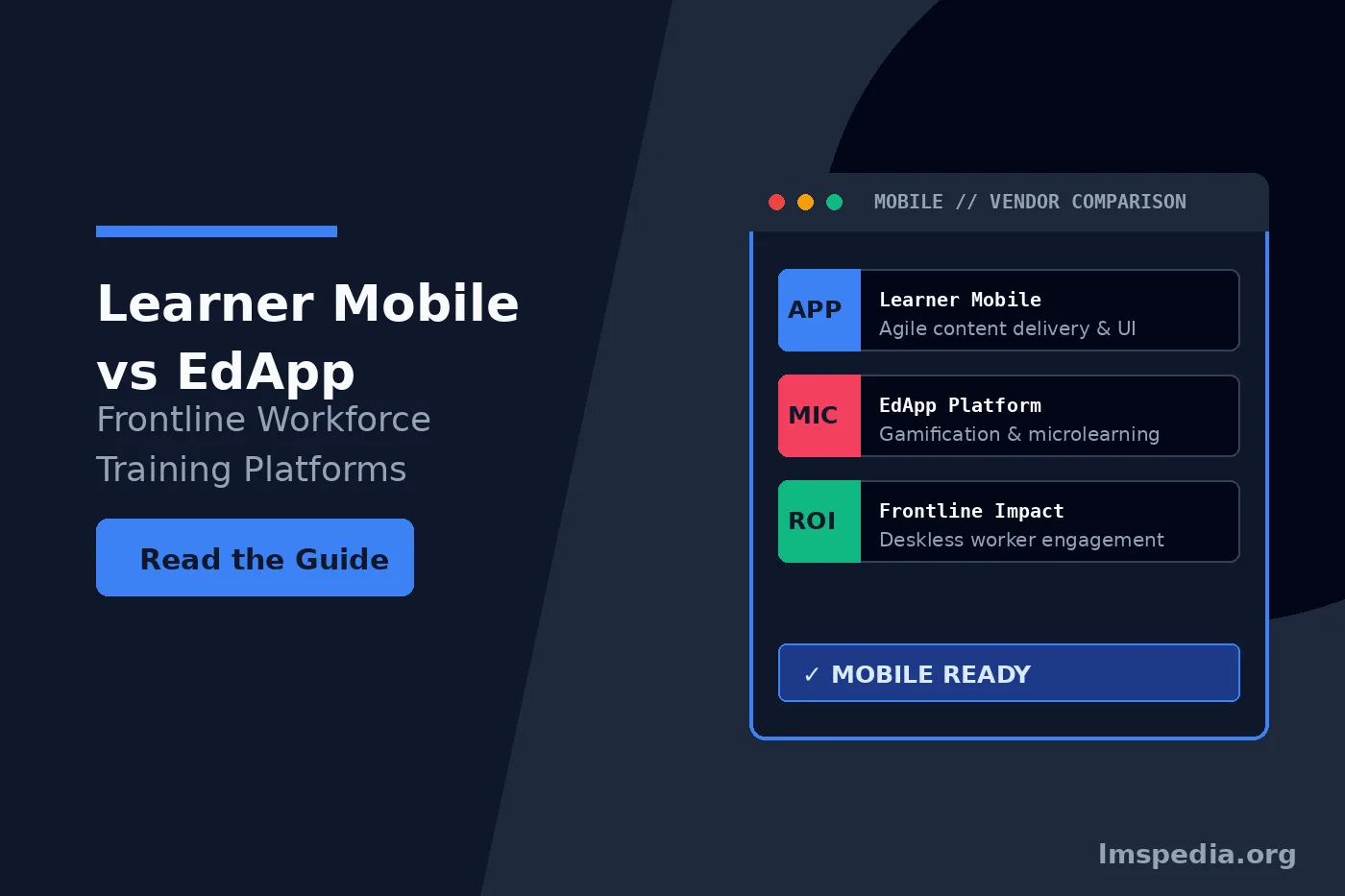
Mobile First Design is Mandatory: Both Learner Mobile and EdApp replace outdated desktop training by delivering bite sized, highly optimized learning content directly to the smartphones of deskless and frontline workers. EdApp Excels at Rapid Creation: EdApp utilizes strict microlearning templates and a seamless Canva integration, allowing managers to build and deploy beautiful courses in minutes without any technical design skills. Learner Mobile Excels at Customization: Learner Mobile offers a sleeker, more professional user interface. It uses advanced algorithms to personalize content delivery, pushing the most relevant training to specific users based on their job role.
Different Approaches to Engagement: EdApp relies on highly interactive, competitive gamification featuring virtual stars and real world prizes. Learner Mobile focuses on professional digital badges and clear, intuitive learning paths.
Offline Capabilities are Essential: Both platforms solve the connectivity problem by allowing workers to download courses while on Wi-Fi and complete their compliance training in offline environments without losing data.
Key Takeaways

The Rise of the Deskless Worker LMS
You cannot effectively train a warehouse associate using corporate accountant software. Traditional systems require stable broadband connections and large computer monitors. Furthermore, they demand long periods of uninterrupted focus from the user. Frontline workers lack all three of these operational luxuries completely. For example, a retail associate might only have three minutes of downtime. Additionally, a delivery driver might completely lose cellular service navigating rural routes. Consequently, a true mobile workforce training platform must solve these environmental challenges.
Solving Environmental Training Challenges
The software must launch instantly on older model smartphones. Next, the user interface must feature large easily tappable buttons completely. Furthermore, administrators must break content down into highly focused bite sized chunks. This specific pedagogical approach prevents cognitive overload entirely. To explore these targeted delivery methods, review our guide on offline mobile learning carefully. Ultimately, specialized mobile software eliminates traditional corporate training friction seamlessly.
EdApp Overview: The Microlearning Giant
EdApp operates as a dedicated mobile first microlearning platform. Specifically, SafetyCulture recently acquired EdApp to integrate training directly into operational checklists. EdApp built its entire reputation on removing friction from course creation. They want managers and subject matter experts to build courses in minutes. Therefore, they eliminate expensive instructional designers who spend weeks programming complex software. The platform heavily emphasizes strict template based design completely.
Rapid Authoring Philosophy
You do not start with a blank digital canvas. Instead, you select a prebuilt template and type your text. Next, you upload a relevant photo and hit publish. This strict template structure ensures every course looks fantastic on a smartphone. It works perfectly regardless of the creator technical skill level. Additionally, EdApp leans heavily into competitive gamification. They believe training should feel exactly like popular smartphone games. Consequently, frontline workers voluntarily complete their mandatory compliance modules.
Learner Mobile Overview: The Agile Alternative
Learner Mobile approaches frontline training from a slightly different angle. They also prioritize a flawless smartphone experience completely. However, they place heavier emphasis on personalized content delivery. Furthermore, they feature sleek consumer grade user interfaces. Learner Mobile wants their platform to feel like modern social media. It successfully avoids feeling like a rigid corporate training matrix. Instead of forcing administrators into rigid templates, Learner Mobile provides flexible ecosystems.
Personalized Content Delivery
Their advanced algorithms analyze user behavior and job roles. Consequently, they push the right content to the right person. For instance, a manufacturing employee might struggle with specific safety protocols. Learner Mobile automatically surfaces highly relevant refresher videos to their feed. Therefore, this adaptive approach aligns perfectly with modern agile development. Review our guide on AI personalised training programs for deeper technical context. Ultimately, adaptive algorithms maximize training efficiency and knowledge retention.
Analyze Workforce Demographics
First, audit your workforce technological literacy carefully. If your employees primarily use legacy smartphones, select platforms featuring exceptionally lightweight application sizes. This prevents software crashing.
Feature by Feature Frontline Training App Comparison
To accurately settle the learner mobile vs edapp debate, we evaluate logistical realities. We must compare them across several critical functional categories. Content velocity remains the most important metric for operational teams. When a new product launches, you must deploy training immediately. Next, we will compare content creation, gamification, and analytics. Therefore, you can evaluate which platform matches your technical resources perfectly.
Content Authoring and Creation
EdApp completely dominates the rapid authoring category currently. Their built in authoring tool contains over eighty interactive microlearning templates completely. You can create swipeable flashcards and matching games quickly. Furthermore, EdApp features a seamless integration with Canva directly. You can design beautiful graphic assets and pull them into EdApp. If you lack time, you can import complete professionally designed courses. Conversely, Learner Mobile offers excellent authoring capabilities too. However, it requires a slightly steeper learning curve from administrators.
Customization and External File Support
The Learner Mobile platform gives you granular control over layout and branding. You can build fluid articles combining text and video perfectly. Furthermore, Learner Mobile supports highly complex external SCORM files seamlessly. Therefore, organizations utilizing dedicated instructional design teams often prefer Learner Mobile. They require absolute control over every pixel on the screen. Ultimately, your choice depends on your internal content creation resources.
Gamification and Engagement
Frontline turnover remains exceptionally high globally right now. Keeping employees engaged requires more than mandatory compliance nagging. EdApp treats gamification as a core product pillar. They feature a unique reward system called Star Bars. When employees answer questions correctly, they earn virtual stars. Next, they use these stars to play digital slot machines. Winning these mini games unlocks actual tangible real world prizes. Consequently, this reward system drastically increases voluntary course completion rates.
Professional Aesthetic Approaches
Alternatively, Learner Mobile takes a more professional subdued approach. They focus heavily on digital badges and clear progress tracking. The primary motivation comes from the slick intuitive user interface. This sleek interface makes learning feel completely effortless for users. Ultimately, many corporate brands prefer this polished aesthetic over bright arcade games. They want their training to feel like premium corporate communication. Therefore, cultural fit determines the better gamification strategy.
Offline Accessibility and Syncing
You cannot rely on cellular data for frontline workers. You might train workers on remote construction sites. Additionally, you might deploy them inside deep mining shafts. Both platforms understand this critical operational requirement completely. EdApp allows users to download entire course libraries directly. They download files while connected to strong internet networks. Consequently, they complete compliance assessments entirely offline during their shifts.
Data Synchronization
When phones reconnect later, the app syncs data automatically. Learner Mobile offers an equally robust offline syncing architecture. Therefore, field service technicians never lose progress due to dropped connections. They can focus entirely on learning instead of troubleshooting connectivity. Ultimately, offline capabilities eliminate severe frontline training bottlenecks completely.
Software Architecture Comparison Table
Let us evaluate leading solutions serving this market directly. Specifically, this responsive table highlights their specific architectures clearly. Consequently, procurement teams can visualize distinct platform advantages completely. Therefore, comparing structural frameworks clarifies your final purchasing decision. The right software prevents operational friction significantly.
Analytics and Management Reporting
Data heavily drives continuous operational improvement for corporate teams. You must prove that your training actually works completely. EdApp provides fantastic visibility into user engagement metrics. Managers can quickly identify incorrectly answered questions easily. Because SafetyCulture owns EdApp, the platform integrates flawlessly with iAuditor. Therefore, you can link training data directly to physical safety inspections.
Customizing Administrative Dashboards
Learner Mobile excels at highly visual customizable administrative dashboards. Regional managers can quickly filter compliance data by store locations. Furthermore, the platform makes exporting data into corporate human resources software incredibly easy. Review our guide on designing a skills taxonomy to structure this data completely. Ultimately, strong reporting proves your operational return on investment.
Implementation and Onboarding Experiences
Purchasing software represents only the first step. Rolling out new applications requires meticulous planning and communication. Implementing EdApp is remarkably fast for new clients. Because they offer freemium tiers, small teams download the app directly. They create accounts and push courses on the exact same day. Their user interface is highly intuitive for all generations. Therefore, frontline workers rarely require technical support to log in.
Structuring Corporate Rollouts
You invite users via simple SMS text messages easily. Conversely, Learner Mobile usually involves a more structured corporate rollout. The platform allows for deep branding customization before launch. Implementation teams spend weeks configuring the user interface perfectly. Therefore, consulting a formal LMS UAT test plan streamlines this process safely. Once deployed, the platform utilizes seamless single sign on integrations. Consequently, employees use existing corporate credentials without remembering new passwords.
Test on Actual Devices
Always test your new platform on the exact mobile devices your employees use daily. Software that looks beautiful on premium enterprise phones often crashes on budget models.
Security and Data Compliance
Deploying software to personal mobile devices introduces severe risks. Security teams must evaluate the risk of data leakage completely. Both platforms utilize robust encryption protocols successfully. These protocols protect your proprietary training data completely. Furthermore, they securely host infrastructure on top tier cloud providers. This strict configuration ensures maximum uptime and database redundancy.
Meeting Federal Safety Standards
If your workforce handles sensitive medical equipment, you must ensure compliance. Review overarching safety requirements dictated by the Occupational Safety and Health Administration safely. Furthermore, verifying compliance documentation through resources like our guide on LMS for compliance training and audit evidence ensures complete institutional readiness. Therefore, you verify that your chosen platform maintains proper audit trails. Furthermore, you protect your organization from crippling regulatory fines. Ultimately, strict data governance protects your corporate liability completely.
Evaluating EdApp Alternatives
The learner mobile vs edapp comparison dominates many software evaluations. However, you should always explore the broader software market. If neither platform perfectly matches your technical requirements, edapp alternatives exist. For example, organizations utilizing strict Microsoft ecosystems might evaluate Viva Learning. Furthermore, your frontline workforce might require highly technical video demonstrations. Therefore, quick microlearning bursts might prove completely insufficient for complex tasks.
Defining Operational Pain Points
You must clearly define your operational pain points first. Do this before locking yourself into a specific vendor ecosystem. Explore our detailed learner mobile vs edapp for deskless and frontline workforce training resource today. Ultimately, thorough evaluation prevents costly implementation failures. Consequently, your operational deployment goes smoothly and stays within budget.
Conclusion
Choosing the right deskless worker LMS fundamentally changes your business. You can finally abandon ineffective back office desktop training completely. Instead, you deliver critical knowledge directly to the factory floor. The conclusion of the learner mobile vs edapp debate relies entirely on corporate culture. If your organization wants to launch immediately with zero instructional design experience, EdApp wins. Its rapid templates and highly addictive gamification engine drive immediate engagement.
However, your brand might require a highly customized elegant user interface. Learner Mobile provides a more sophisticated and polished operational ecosystem. Therefore, carefully analyze your workforce demographics and content creation resources. Consequently, you can confidently select the exact mobile workforce training platform you need. Ultimately, deploying the proper architecture maximizes your frontline operational efficiency completely. Educating your frontline workers securely transforms your business permanently.
FAQ
Q1. What is the main difference between Learner Mobile and EdApp?
The main difference lies in their content creation philosophy and user experience. EdApp focuses heavily on rigid, rapid microlearning templates and highly competitive gamification. Learner Mobile focuses on a highly customizable, fluid user interface that uses algorithms to personalize content delivery for each individual user.
Q2. Do both of these platforms work without an internet connection?
Yes. Both Learner Mobile and EdApp feature robust offline capabilities. Frontline workers can download their assigned training courses while connected to Wi-Fi. They can then complete the modules entirely offline. The app will automatically sync their completion data back to the servers once they regain a cellular connection.
Q3. Which platform is better if I do not have a dedicated instructional designer?
EdApp is significantly better for teams lacking dedicated design resources. Their authoring tool relies on prebuilt, highly interactive templates. Furthermore, their native integration with Canva allows anyone to quickly create professional looking graphics without needing expensive design software.
Q4. What are some good EdApp alternatives for deskless workers?
If EdApp does not meet your needs, popular alternatives for frontline training include Learner Mobile, Axonify, and TalentCards. These platforms all prioritize mobile first content delivery and microlearning methodologies specifically designed for non desk employees.
Q5. Can I upload existing SCORM files into these mobile platforms?
While both platforms technically support SCORM imports, Learner Mobile generally handles complex, legacy SCORM packages better. EdApp heavily encourages administrators to rebuild their content using their native microlearning templates to guarantee a flawless, responsive smartphone experience.