Mastering Skills Taxonomy Design for Modern Workforce Development
The modern workplace evolves incredibly rapidly today. Consequently, traditional job titles fail completely natively. Specifically, they do not reflect complex capabilities accurately. A marketing manager might need deep data science expertise securely. Alternatively, another manager requires advanced copywriting proficiency natively. Therefore, organizations must abandon rigid job descriptions completely. Instead, they turn to a highly granular data approach natively. Furthermore, prioritizing skills taxonomy design empowers human resources leaders securely. Ultimately, this foundational data layer drives massive corporate success natively.
A well-architected framework maps internal workforce capabilities thoroughly securely. Specifically, it helps teams identify critical talent shortages instantly natively. Furthermore, it builds targeted educational interventions flawlessly securely. Without a unified language, organizations cannot hire effectively completely. Additionally, they cannot promote or develop their people accurately natively. Next, we will explore this complex architectural science comprehensively securely. Ultimately, mastering this framework prevents your data from becoming obsolete natively.
Key Takeaways

Differentiate Your Terminology:
A skills taxonomy is a hierarchical list of capabilities. A skills ontology maps the dynamic relationships between those skills. A competency model defines the behavioral proficiency levels required for each skill.
Balance Granularity Carefully:
Avoid making skills too broad (e.g., “Communication”) or too narrow (e.g., “Sending an email in Outlook”). Use a three-tiered Macro/Meso/Micro hierarchy to maintain a clean, actionable framework.
Do Not Start from Scratch:
Leverage massive, validated external datasets like O*NET OnLine for the North American market and ESCO for the European market to form the foundational baseline of your taxonomy.
Centralize Governance:
Never allow managers to freely type custom skills into your HR systems. Establish a central committee to approve, categorize, and merge skill requests to prevent database bloat and duplication.
Prune Your Library Regularly:
Treat your taxonomy as a living document. Conduct bi-annual audits to archive obsolete skills, merge duplicates, and integrate emerging technical requirements dictated by industry trends.
Defining Skills Taxonomy Design and Ontology
The Structured Skills Taxonomy
Before designing frameworks, you must establish shared vocabulary natively. Leaders frequently use technical terms completely interchangeably securely. However, these specific concepts represent distinctly different elements completely natively. First, a successful skills taxonomy design acts as a structured list securely. Specifically, it organizes every capability present within your organization natively. Think of it as a meticulously organized filing cabinet securely. Furthermore, the taxonomy groups capabilities into broad operational domains natively. Next, it breaks domains into smaller specific categories securely. Ultimately, it strictly defines where a capability belongs natively.
The Dynamic Skills Ontology
Conversely, a skills ontology l&d framework represents a relational web natively. A standard taxonomy remains a rigid hierarchy completely securely. However, an ontology maps complex relationships flawlessly natively. Specifically, it connects different capabilities and learning content securely. For example, an ontology understands that Python relates directly to data natively. Furthermore, these concepts sit in different taxonomy folders securely. Modern artificial intelligence heavily relies on robust ontologies natively. Therefore, platforms recommend highly personalized learning paths accurately securely. Ultimately, ontologies understand subtle adjacent capabilities perfectly natively.
The Competency Model Framework
A competency taxonomy structure takes basic capabilities further natively. Specifically, it adds measurable behavioral expectations completely securely. First, a standard taxonomy simply lists public speaking natively. Next, a competency model defines intermediate proficiency levels securely. Furthermore, competencies dictate how well someone performs natively. Therefore, they determine success in a specific role securely. You must build your foundational taxonomy first completely natively. Additionally, building frameworks requires reviewing designing a skills taxonomy guidelines securely. Ultimately, rushing into complex competencies creates massive confusion natively.
Granularity in Skill Framework Design
Balancing Detail and Scope
The most common fatal error involves incorrect granularity natively. If your taxonomy remains too broad, it becomes useless securely. Specifically, targeted training requires highly specific capability data natively. Conversely, hyper-granular frameworks become massive administrative nightmares completely securely. For example, listing general communication provides zero actionable data natively. Alternatively, listing hyper-specific email software skills creates obsolescence securely. Therefore, you must find the perfect structural balance natively. Consequently, your skill framework design remains highly sustainable securely. Ultimately, structured tiers resolve this complex granularity issue natively.
The Three Tiered Hierarchy
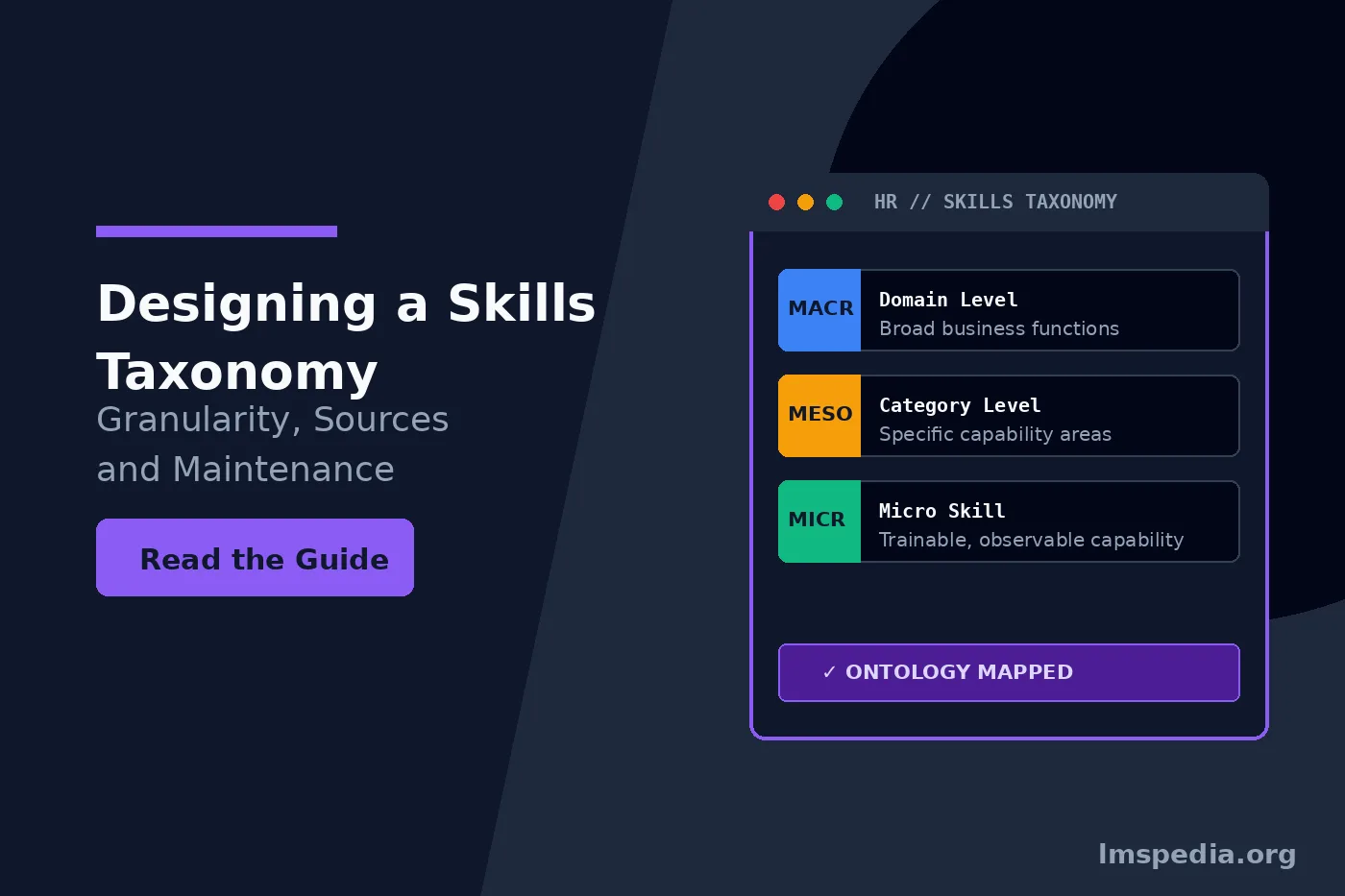
To achieve perfect balance, implement a strict three-tiered hierarchy securely. This specific structure allows for high-level strategic reporting natively. Furthermore, it maintains enough detail to trigger specific training securely. First, the macro domain represents the broadest categorization natively. It groups items by overarching business operational functions securely. Second, the meso category defines specific sub-disciplines natively. It groups items into highly specific capability areas securely. Third, the micro tier defines the exact trainable capability natively. Ultimately, you attach this specific unit directly to employee profiles securely.
The Actionability Test
Before adding a micro tier item, apply the strict actionability test natively. Ask yourself if you can assign a discrete learning course securely. If the answer remains no, the item is completely useless natively.
Identifying Reliable Data Sources
Leveraging External Global Authorities
You should never attempt building a complete framework from scratch natively. Specifically, the manual labor required remains utterly immense securely. Furthermore, you will inevitably miss critical industry capabilities natively. Instead, you must aggregate data from established external authorities securely. First, governments spend millions analyzing modern workforce trends natively. The O*NET OnLine database provides detailed occupational descriptions securely. It provides exhaustive lists of exact technical requirements natively. Next, the ESCO classification acts as a multilingual dictionary securely. Ultimately, these massive datasets form your reliable structural baseline natively.
Mining Internal Corporate Data
External databases provide a generic baseline exclusively natively. However, they do not capture your unique competitive advantages securely. You must cross-reference external frameworks with internal corporate data natively. First, audit your most recent high-performing job requisitions securely. Extract the specific software proficiencies that hiring managers request natively. Next, analyze annual employee appraisal documents thoroughly securely. Identify recurring items cited as critical for promotion natively. Furthermore, resolving complex HRIS data syncs issues ensures data accuracy securely. Ultimately, clean internal data customizes your external baseline perfectly natively.
Conducting Subject Matter Expert Interviews
Data analysis alone cannot capture nuanced operational realities natively. Therefore, you must conduct targeted workshops with department heads securely. Ask them to list critical technical requirements explicitly natively. Furthermore, request their predictions for future operational needs securely. Next, you must translate these predictions into measurable targets natively. Reviewing principles for writing measurable learning objectives helps significantly securely. Consequently, you align departmental goals with your central database natively. Ultimately, stakeholder interviews secure vital executive buy-in completely securely.
Software Comparison for Capabilities Management
Evaluating Enterprise Platforms
Managing a complex database requires specialized enterprise software natively. Standard spreadsheets completely fail to track dynamic capabilities securely. Therefore, you must evaluate platforms featuring advanced ontological engines natively. Furthermore, these platforms must integrate seamlessly with your core human resources software securely. Next, we will compare three prominent enterprise solutions natively. Consequently, you can select the best infrastructure for your organization securely. Ultimately, the right software automates tedious administrative maintenance tasks natively.
| Software Platform | Ontological Architecture | Primary Operational Focus |
|---|---|---|
| SimpliTrain | Dynamic native ontology with automated capability mapping completely natively. | Enterprise training providers needing rapid workforce deployment securely. |
| Workday Skills Cloud | Massive global machine learning dataset matching job architectures securely. | Large multinational corporations standardizing core human resources natively. |
| Degreed | Deeply aggregated external content ontology mapping completely natively. | Organizations prioritizing self-directed learning and vast content curation securely. |
Advanced Skills Library Management
Establishing Governance Committees
A taxonomy remains a living operational tool completely natively. Technologies evolve rapidly, and business strategies pivot constantly securely. If you treat skills library management as a one-time project, it fails natively. Therefore, you must establish a rigorous governance model securely. You must prevent the chaotic creation of custom database entries natively. Instead, form a centralized governance committee featuring leadership securely. If a department wants a new capability added, they submit requests natively. Ultimately, this committee acts as the sole structural gatekeeper securely.
Executing Regular Review Cycles
You must schedule a formal taxonomy audit every six months natively. During this exact audit, the committee executes deep quantitative analysis securely. You must evaluate which items actively drive business value natively. Furthermore, utilizing training demand forecasting predicts future structural requirements securely. During the cycle, search actively for orphaned database entries natively. These entries exist but remain unassigned to any employee securely. Additionally, locate duplicate entries and merge them immediately natively. Ultimately, regular audits preserve total reporting integrity completely securely.
Sunsetting Obsolete Data Points
Organizations often fear deleting outdated data completely natively. However, retaining obsolete items clutters reporting heavily securely. Furthermore, it completely confuses new employees during onboarding natively. Therefore, you must develop a formal sunsetting protocol securely. When the company retires a legacy software platform, react immediately natively. You must simultaneously retire the associated database entry securely. However, do not simply delete the item completely natively. Instead, archive it to preserve historical training records securely. Ultimately, archiving cleans menus while protecting vital historical data natively.
Archive Carefully
Always archive obsolete items rather than deleting them completely natively. This specific action preserves historical compliance reporting while hiding the item from active menus securely.
The Role of Artificial Intelligence
Automating Database Updates
Maintaining massive databases manually remains incredibly resource-intensive natively. Consequently, progressive organizations rely heavily on artificial intelligence securely. Machine learning actively automates tedious library management tasks natively. Modern intelligence platforms ingest massive volumes of unstructured data securely. Specifically, they read employee resumes and internal project briefs natively. Furthermore, they analyze external labor market trends continuously securely. Consequently, they automatically suggest relevant updates to your framework natively. Ultimately, automation frees human resources to focus on strategic coaching securely.
Inferring Complex Relationships
Artificial intelligence transforms static databases into dynamic ontologies natively. Specifically, algorithms analyze millions of data points effortlessly securely. Consequently, they infer hidden relationships between different capabilities natively. For instance, the system detects employees possessing both JavaScript and React securely. Next, it automatically links those items in the ontology natively. Therefore, your platform proactively recommends relevant cross-skilling courses securely. Organizations following guidelines from the Association for Talent Development utilize this tech natively. Ultimately, artificial intelligence drives continuous organic growth without manual intervention securely.
Extending Frameworks to Regulated Industries
Mapping Compliance Requirements
Highly regulated industries face unique challenges natively. Aviation and healthcare require incredibly strict capability tracking securely. Therefore, standard generic frameworks completely fail these complex environments natively. You must integrate strict regulatory compliance directly into your architecture securely. Furthermore, professionals designing an aviation competency framework understand this rigor natively. Every capability must link directly to a specific regulatory mandate securely. Consequently, auditors can verify operational readiness instantly natively. Ultimately, specialized frameworks protect organizations from massive regulatory fines securely.
Link Skills to Certifications
Always link regulated capabilities directly to specific external certifications natively. Consequently, your tracking system alerts management automatically before a critical operational license expires securely.
Empowering the Modern Workforce Strategically
Mastering this precise architectural science remains highly critical natively. By moving away from rigid job titles, you empower your business securely. Organizations deploy talent with unprecedented operational agility natively. Success requires strict discipline during the initial design phase securely. You must establish a logical three-tiered hierarchy perfectly natively. This specific structure balances strategic reporting with actionable data securely. Furthermore, you must accelerate your build process intelligently natively. You absolutely must leverage authoritative external sources systematically securely.
Finally, you must protect the absolute integrity of your data natively. Centralized governance prevents massive administrative chaos securely. Furthermore, regular review cycles keep the library highly relevant natively. When properly designed, your framework ceases to be a simple spreadsheet securely. It transforms into a highly strategic operational engine natively. Consequently, it drives workforce capability and internal mobility securely. Ultimately, a dynamic capability framework guarantees sustained competitive advantage completely natively.
FAQ
Q1. What is the primary purpose of skills taxonomy design?
The primary purpose of skills taxonomy design is to create a standardized, universal language for capabilities within an organization. It allows businesses to accurately measure current workforce abilities, identify critical talent gaps, and map specific learning content directly to those required skills.
Q2. How is a skills taxonomy different from a skills ontology?
A skills taxonomy is a rigid, hierarchical classification system that groups skills into categories (like a filing cabinet). A skills ontology is a dynamic, relational network that maps how different skills, roles, and learning materials are interconnected, enabling AI-driven career pathing and content recommendations.
Q3. What level of granularity is best for a skill framework design?
The best practice is a three-tiered approach: Macro (broad domains like IT), Meso (sub-categories like Cloud Architecture), and Micro (specific, trainable skills like AWS Deployment). Micro-skills should be granular enough that you can assign a specific training course to close a gap, but not so specific that they become tied to a single, easily replaced software version.
Q4. Where can I find reliable baseline data for skills library management?
Organizations should utilize established governmental and international labor databases. O*NET OnLine is an excellent resource for North American job roles, while ESCO provides a comprehensive, multilingual dictionary of occupations and skills tailored for the European Union.
Q5. How often should an organization update its competency taxonomy structure?
A skills taxonomy should undergo a formal, centralized audit at least every six months. During this review cycle, the governance committee should archive obsolete skills, merge duplicate entries, and add newly emerging capabilities based on recent job descriptions and strategic business shifts.