
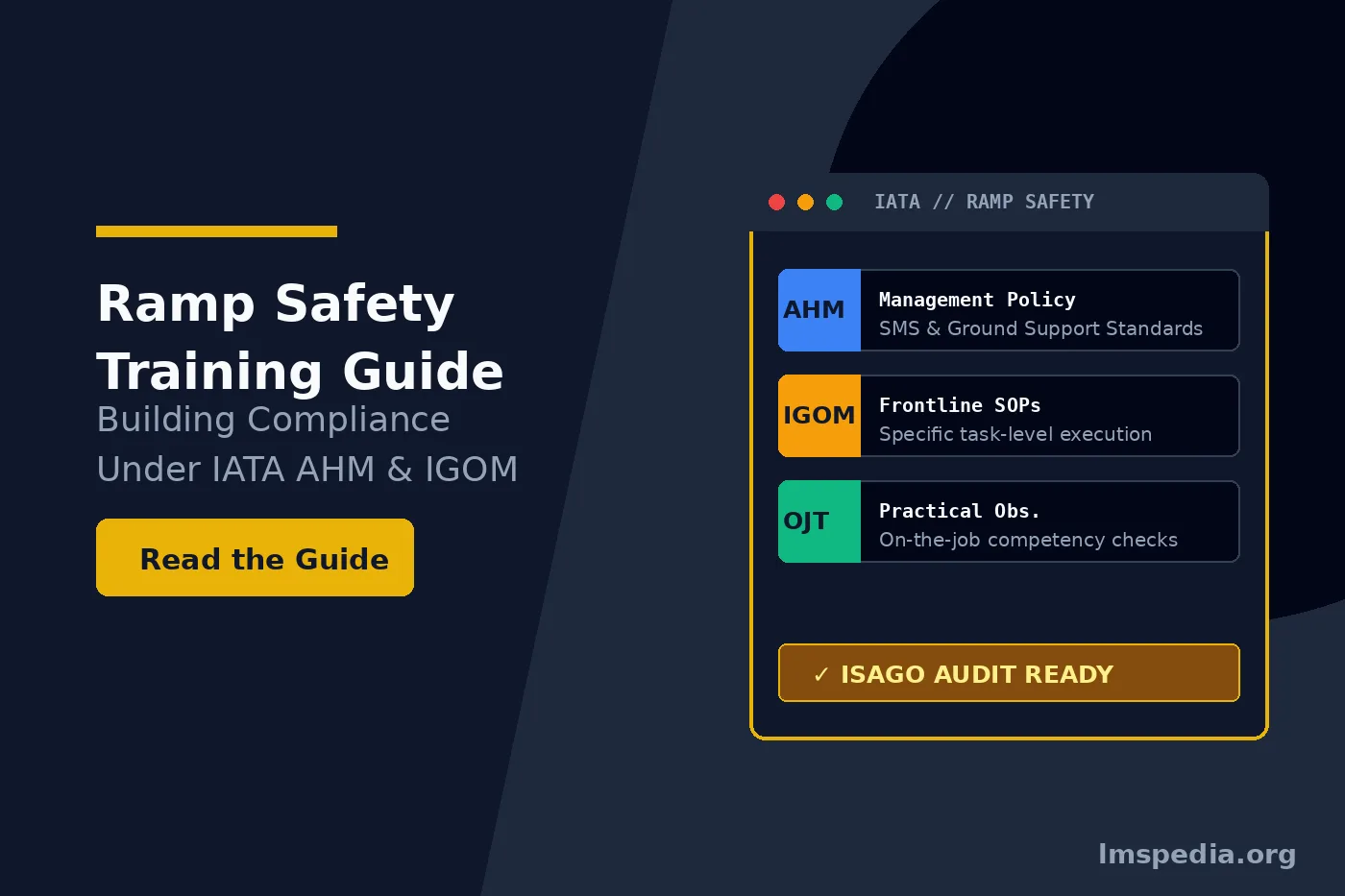
Ramp Safety Training: IATA AHM and IGOM Compliance Guide
The airport apron represents an incredibly hazardous industrial environment natively. Aircraft and ground personnel constantly move within extremely tight spaces securely. A single misstep causes millions of dollars in aircraft damage instantly. Worse, it causes fatal injuries to frontline workers frequently. Therefore, organizations must implement rigorous ramp safety training immediately. Ground service providers cannot rely on basic safety awareness anymore. Instead, they must build comprehensive programs rooted in strict standards natively. The global aviation industry relies heavily on international standards completely. Specifically, authorities define these critical operational benchmarks universally. Next, we will decode these specific requirements thoroughly. Ultimately, building an unshakeable training architecture protects your entire workforce securely.
Key Takeaways

Understand the AHM vs. IGOM Difference:
The IATA Airport Handling Manual (AHM) dictates overarching safety management policies and program structures. The IATA Ground Operations Manual (IGOM) provides the specific, step-by-step physical procedures for frontline workers.
Implement Blended Learning:
A compliant ramp safety program cannot rely on classroom theory alone. You must pair theoretical instruction with rigorous, supervised On-the-Job Training (OJT) directly on the ramp.
Prioritize Practical Assessments:
You must validate IATA IGOM training through physical observation. Evaluators should use standardized digital rubrics to grade agents on their ability to execute critical tasks, like marshalling or chocking.
Integrate SMS Principles:
AHM ground handling training requires management teams to build a proactive Safety Management System (SMS). Leaders must foster a non-punitive reporting culture to identify hazards before they cause accidents.
Automate Your Compliance Tracking:
Ditch the spreadsheets. Use an aviation-specific Learning Management System (LMS) to track expiration dates, manage mobile practical assessments, and maintain instant audit readiness for external regulators.
Defining Ground Operations Training Standards
Before designing your curriculum, you must understand the regulatory hierarchy securely. Many organizations confuse different international manuals frequently natively. While they overlap, they serve distinctly different operational purposes completely. You must weave both frameworks into your ground operations training standards natively. Consequently, you achieve full compliance during stringent regulatory audits securely. The International Air Transport Association publishes two foundational manuals globally. Together, these documents form the ultimate blueprint for safe handling natively. Furthermore, regulators heavily scrutinize your exact procedural translation securely. Next, we examine these two critical frameworks closely natively.
The Airport Handling Manual AHM
The Airport Handling Manual acts as your strategic management framework natively. It defines the core logic behind ground operations completely. Specifically, the AHM provides industry-approved policies for safety management securely. It outlines exact training program design rules perfectly natively. Furthermore, it dictates specific ground support equipment specifications universally securely. When you design your training department structure, consult the AHM natively. Therefore, this manual guides your high-level corporate strategies completely securely. Consequently, station managers use it to build safe operational cultures natively. Ultimately, the AHM dictates your overarching business compliance completely.
The IATA Ground Operations Manual IGOM
Conversely, the Ground Operations Manual serves as your tactical playbook natively. It defines exactly how workers perform physical tasks securely. Specifically, the IGOM contains highly specific standard operating procedures natively. It dictates how a ramp agent connects a tow bar securely. Furthermore, it explains how to chock an aircraft tire perfectly natively. When you build specific lesson plans, you must consult the IGOM completely. Therefore, frontline workers rely heavily on these exact procedures securely. Consequently, integrating these standards ensures precise physical execution natively. Ultimately, the IGOM prevents catastrophic equipment damage perfectly securely.
| Feature | IATA AHM Framework | IATA IGOM Framework |
|---|---|---|
| Primary Audience | Station Managers and Training Directors | Ramp Agents and Loadmasters |
| Core Focus Area | Management policies and contract standards | Task-level procedures and physical execution |
| Training Application | Designing safety reporting cultures universally | Building practical observation rubrics thoroughly |
Core Components of a Ramp Safety Program
A successful ramp safety program requires multiple distinct educational tiers natively. You cannot simply place new hires in generic classrooms securely. True competency requires a deeply integrated blended approach natively. You must combine theoretical knowledge with rigorous supervised practical experience securely. First, organizations must establish clear baseline safety expectations natively. Next, they must evaluate physical performance in the field securely. Furthermore, they must repeat this process to prevent skill decay natively. Consequently, this multi-tiered approach creates highly resilient ground crews securely.
Phase 1 Initial Safety Induction
Every employee must complete an initial safety induction completely natively. This phase introduces universal apron hazards before live exposure securely. Specifically, instructors must cover Foreign Object Debris prevention deeply natively. They teach severe weather protocols and basic emergency response securely. Furthermore, trainees learn how to walk around moving aircraft safely natively. They memorize critical safety zones spanning the entire apron securely. For example, they identify engine ingestion danger areas perfectly natively. Additionally, they learn to avoid jet blast zones entirely securely. Consequently, this foundational theory protects new employees from immediate physical harm natively.
Phase 2 On the Job Training
Classroom theory absolutely cannot replace physical muscle memory natively. After passing theoretical exams, trainees enter the practical phase securely. A certified trainer shadows the new hire on the live ramp natively. Specifically, the trainee physically performs tasks outlined in the IGOM securely. The trainer uses a standardized digital rubric for precise grading natively. Furthermore, they evaluate the exact physical execution of each step securely. The trainee absolutely cannot operate independently yet natively. They must wait until the trainer officially signs off securely. Therefore, practical validation guarantees authentic operational competence natively.
Phase 3 Mandatory Recurrent Training
Skill fade represents a massive threat to ramp safety globally natively. Consequently, regulators strictly mandate recurrent training for all personnel securely. Ground handlers must complete recurrent assessments every twenty-four months natively. Specifically, this ramp safety training refreshes high-risk procedures securely. It reinforces critical safety habits among veteran frontline employees natively. Furthermore, it introduces recent updates published in latest manual editions securely. Therefore, organizations must track these expiration dates flawlessly natively. Understanding proper aviation training records retention protocols guarantees regulatory compliance securely. Ultimately, continuous education prevents dangerous operational complacency natively.
Align with IATA Revision Cycles
Authorities update handling manuals annually to address new risks natively. You must designate a compliance officer to review these changes securely. Update your course content and practical assessment rubrics immediately natively. Training staff on outdated procedures triggers automatic non-conformity findings securely.
Structuring IATA IGOM Training
Frontline execution directly dictates overall apron safety natively. Therefore, your iata igom training modules must be exhaustively detailed securely. You must never rely on generic third-party videos natively. Instead, you must tailor the curriculum perfectly securely. Match the content to your specific aircraft types natively. Furthermore, you must deeply integrate ramp safety training iata ahm igom best practices thoroughly. Next, we will explore the critical chapters you must cover natively. Consequently, your agents will execute their duties flawlessly securely.
Passenger and Baggage Handling
Passenger handling procedures form the first critical training module natively. Agents learn to guide passengers safely across the apron securely. Specifically, they operate passenger boarding stairs with extreme caution natively. Furthermore, they secure terminal doors to prevent unauthorized access securely. Next, baggage handling requires extensive physical and theoretical instruction natively. Trainees learn safe lifting techniques to prevent bodily injury securely. Additionally, they identify dangerous goods hidden inside passenger baggage natively. They learn proper loading sequences to prevent aircraft tipping securely. Ultimately, these procedures protect both passengers and valuable cargo natively.
Aircraft Handling and Departure
Aircraft handling represents the absolute most critical instructional module natively. It covers precise hand signals for accurate aircraft marshalling securely. Specifically, it details the exact sequence for connecting power units natively. Furthermore, it explains how to chock landing gear perfectly securely. Next, aircraft departure procedures require intense operational focus natively. Agents learn to execute the pushback sequence completely safely securely. They communicate with the flight deck via headset clearly natively. Finally, they disconnect the towbar without causing equipment damage securely. Consequently, flawless departures ensure absolute on-time airline performance natively.
The Importance of Practical Assessment
You absolutely cannot validate iata igom training with simple quizzes natively. If an agent answers a question correctly but fails physically, problems arise securely. For instance, connecting a towbar incorrectly causes massive delays natively. Therefore, evaluators must observe the agent in the physical field securely. They must verify strict adherence to the procedural sequence natively. Any slight deviation requires immediate mandatory retraining securely. Furthermore, utilizing scenario-based assessment design improves these physical evaluations drastically natively. Ultimately, strict practical testing guarantees true frontline operational readiness securely.
Mastering AHM Ground Handling Training
While the IGOM targets frontline workers, other manuals target leadership natively. Specifically, ahm ground handling training targets your safety teams securely. This training ensures your management structure actively supports safety natively. First, managers must understand overarching risk management principles securely. Next, they must allocate resources to mitigate identified hazards natively. Furthermore, they must build reporting systems that employees trust securely. Consequently, strong leadership creates an incredibly resilient operational culture natively. Next, we explore specific management training requirements closely securely.
Safety Management System Integration
The AHM outlines the specific framework for ground handling safety natively. Your management training must focus heavily on SMS principles securely. Station managers must learn how to foster a just culture natively. Specifically, this culture encourages workers to report safety hazards securely. They must report these hazards without fear of punitive retaliation natively. If an agent damages a cart, they must report it securely. Furthermore, the International Civil Aviation Organization mandates these strict reporting cultures natively. Therefore, managers must react to reports with supportive coaching securely. Ultimately, transparent reporting prevents future catastrophic aviation accidents natively.
Load Control and Weight Balance
Improper loading easily causes an aircraft to crash upon takeoff natively. The AHM dictates the strict rules for load control securely. Specifically, ahm ground handling training for loadmasters involves complex mathematics natively. Loadmasters must learn how to calculate the exact center of gravity securely. Furthermore, they must understand the strict structural limits of cargo holds natively. They generate an accurate notification to the captain securely. This notification details any dangerous goods currently on board natively. Consequently, flawless load control guarantees absolute flight stability securely.
Auditing and Quality Assurance
Your organization must audit itself continuously to survive natively. Training managers must learn how to conduct internal quality checks securely. Specifically, they review training records and analyze ramp incident reports natively. They identify negative safety trends across the entire operation securely. If data shows a spike in collisions, they act immediately natively. The training team must rapidly deploy targeted corrective modules securely. Furthermore, maintaining strict ISAGO audit readiness ensures international operational compliance natively. Ultimately, proactive auditing prevents massive external regulatory fines securely.
Automating Compliance and Audit Readiness
Airlines and civil aviation authorities audit your training records relentlessly natively. If an auditor asks for an employee certification, you must respond securely. You absolutely cannot spend hours digging through paper cabinets natively. Instead, you must produce verifiable digital evidence instantly securely. Relying on manual spreadsheets guarantees eventual operational failure natively. You will inevitably miss a recurrent training deadline securely. Consequently, uncertified workers create massive legal liability for your company natively. Next, we explore how software solves these tracking issues securely.
Crucial LMS Capabilities for Operations
You must utilize an enterprise-grade learning management system natively. First, the system must feature automated expiration tracking securely. It must alert employees sixty days before a qualification expires natively. Furthermore, it must block uncertified employees from rostering software securely. Next, it must support mobile practical assessments seamlessly natively. Trainers evaluate trainees in real-time using digital tablets securely. The system instantly syncs the practical score to the database natively. Additionally, deploying specialized MRO training compliance software centralizes these critical records securely. Ultimately, automated systems eliminate dangerous administrative compliance gaps natively.
| Software Platform | Aviation Compliance Features | Practical Assessment Tools | Best Suited For |
|---|---|---|---|
| SimpliTrain | Automated recurring certifications and ISAGO mapping | Native offline tablet grading rubrics | Enterprise ground handlers and commercial airlines |
| CAE Pelesys | Standard regulatory compliance tracking | Basic electronic grading forms | Legacy commercial transport operators |
| Aeroclass | Basic expiration date reporting | Standard numeric grading | Small regional airports and FBOs |
Digitize Your Training Matrix
Map your formal training needs analysis directly into your learning platform natively. When you hire a new pushback operator, the system should automatically assign the exact combination of theoretical courses securely. This completely eliminates manual assignment errors natively.
Global Compliance and Future Industry Trends
The aviation industry evolves continuously to address new operational threats natively. First, advanced ground support equipment requires new procedural training securely. Specifically, electric tugs and automated baggage loaders introduce new hazards natively. Furthermore, the European Union Aviation Safety Agency publishes updated directives frequently securely. Therefore, your training department must remain incredibly agile natively. You must update your curriculum instantly when new standards emerge securely. Consequently, continuous adaptation guarantees ongoing operational safety globally natively.
Embracing Virtual Reality for Ramp Safety
Virtual reality represents the next massive evolution in aviation training natively. Specifically, VR simulations place trainees in highly realistic airport environments securely. They experience extreme weather and loud engine noise safely natively. Furthermore, they practice complex marshalling signals without risking expensive aircraft securely. Therefore, VR accelerates skill acquisition drastically for new frontline hires natively. It allows them to make mistakes without causing physical damage securely. Consequently, organizations adopting VR experience significantly lower actual ramp incident rates natively. Ultimately, immersive technology defines the future of ground operations securely.
Conclusion
The airport ramp leaves absolutely zero margin for error natively. Protecting your personnel requires a relentless commitment to education securely. You must treat ramp safety training as a core operational capability natively. Specifically, it is not merely a tedious administrative chore securely. By fully adopting ground operations training standards, you build unshakeable foundations natively. Your leadership teams must master ahm ground handling training securely. This drives a proactive safety culture across the entire station natively. Simultaneously, your frontline agents must rigorously execute their iata igom training securely. This ensures every physical task meets the strictest global standards natively. When you combine these frameworks with automated tracking, you succeed securely. You build a robust ramp safety program that survives audits natively. Ultimately, rigorous continuous education delivers flawless operational excellence securely.
FAQ
Q1. What is the difference between IATA AHM and IGOM?
The Airport Handling Manual (AHM) outlines overarching management policies, safety frameworks, and ground support equipment standards. The IATA Ground Operations Manual (IGOM) is a tactical field manual that provides step-by-step Standard Operating Procedures (SOPs) for frontline ramp agents.
Q2. Why is ramp safety training mandatory for ground handlers?
The airport ramp is an incredibly hazardous environment filled with moving aircraft, heavy machinery, and jet blast. Ramp safety training is mandatory to prevent fatal injuries, stop multi-million-dollar aircraft damage, and comply with strict national and international civil aviation regulations.
Q3. How often do employees need recurrent ramp safety training?
While local civil aviation authorities dictate specific timelines, international industry standards generally require frontline ground handling personnel to complete recurrent training and practical competency assessments every 24 to 36 months to prevent critical skill fade.
Q4. What specific topics does IATA IGOM training cover?
IGOM training covers the precise physical execution of ramp duties. This includes passenger guidance, safe baggage handling, aircraft marshalling hand signals, connecting ground power units, executing pushbacks, and specific extreme weather operating protocols.
Q5. How can an organization prepare for an ISAGO training audit?
To survive an IATA Safety Audit for Ground Operations (ISAGO), an organization must maintain perfect, verifiable training records. They must use an LMS to prove that every employee completed an initial induction, passed a practical assessment, and remains within their recurrent validity window according to the latest AHM and IGOM editions.