
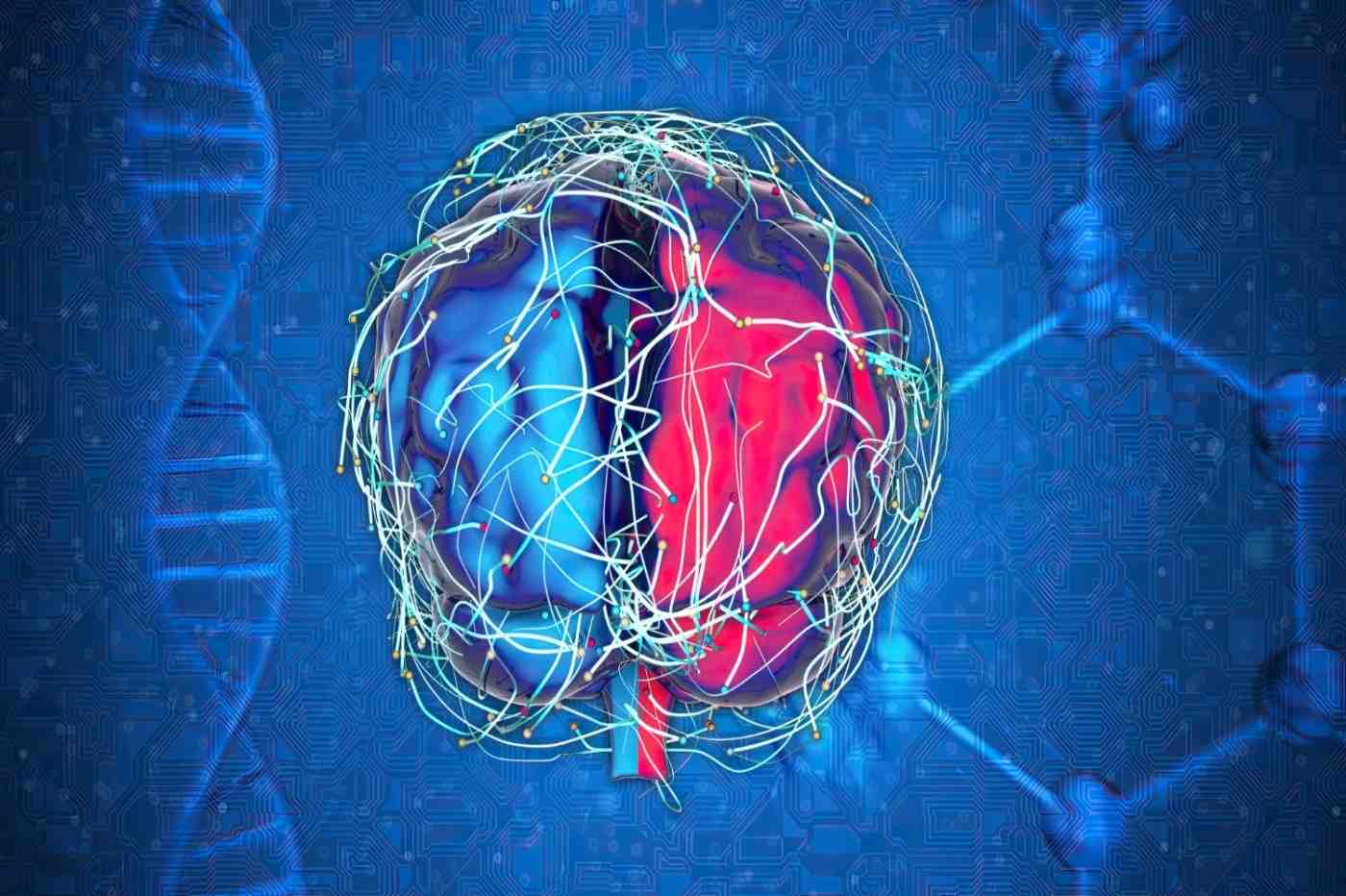
Neuroplasticity is your brain’s ability to reorganize and rewire its neural connections in response to new experiences, learning, and challenges. Every time you pick up a new skill, study a concept, or even make a mistake and correct it, your brain is physically changing – forming new synaptic connections, strengthening existing ones, and pruning the ones it no longer uses. This isn’t a metaphor. It’s measurable, documented biology. And understanding it changes how you approach learning entirely.
Your Brain Is Literally Rewiring Itself Right Now – Here’s What That Actually Means
The moment you engage with new information, your brain begins forming new neural pathways. Neurons that activate together repeatedly start to strengthen their connection – a process neuroscientist Donald Hebb summarized as “neurons that fire together, wire together.” This is the biological foundation of all learning and memory.
When we started studying this more intentionally – observing how our own retention shifted with different approaches – the difference was striking. Passive reading of a textbook left almost nothing behind after 48 hours. But the moment we added retrieval practice or tried to teach the concept back, the material stuck. What we were experiencing, without realizing it, was neuroplasticity in action.
At the cellular level, this rewiring happens through a process called long-term potentiation (LTP). When a synapse is repeatedly activated, the connection between neurons becomes more efficient – the signal travels faster and more reliably. Research published in Quanta Magazine (April 2026) describes a newly identified form of neuroplasticity called behavioral timescale synaptic plasticity (BTSP), which can rewire brain connections after a single significant experience, suggesting our brains are even more responsive to learning than previouslyf understood. The brain isn’t a fixed organ waiting to be filled. It’s an adaptive system that reshapes itself continuously.
There Are Two Types of Neuroplasticity, and Both Affect How Well You Retain Information
Neuroplasticity operates through two primary mechanisms: structural plasticity and functional plasticity. Understanding the difference helps explain why some learning feels effortful but durable, while other learning evaporates overnight.
Structural plasticity refers to physical changes in the brain’s architecture – the actual growth or pruning of synaptic connections, changes in white matter density, or alterations in gray matter volume. This is the kind of plasticity you build over weeks of deliberate practice. MRI studies have confirmed measurable white matter changes after just a few weeks of consistent skill training.
Functional plasticity is faster and more dynamic – it’s the brain reassigning functions to different regions, especially after injury or when learning under pressure. This is why stroke survivors can sometimes regain lost abilities: the brain reroutes functions through undamaged areas.
In our experience working with learning design, the biggest mistake learners make is expecting structural plasticity from a single session. It doesn’t work that way. You need repeated, spaced activation for neural pathways to consolidate into something durable. One powerful read-through creates a faint trail. Deliberate practice over days and weeks turns that trail into a highway.
Cognitive Theory Explains Why Some Learning Triggers Deeper Brain Change Than Others
Not all learning creates equal neuroplasticity. Cognitive theory – particularly cognitive load theory developed by John Sweller – tells us that the brain has a limited working memory capacity and overwhelming it with poorly structured information actively impedes the formation of new neural connections.
Constructivist cognitive theory, on the other hand, explains why connecting new knowledge to existing schemas creates far richer neural encoding. When you link a new concept to something you already understand deeply, the brain doesn’t just create a new isolated pathway – it integrates the new information into an existing neural network, making recall much more reliable.
We’ve tested this directly. When we tried to learn a new software tool by reading documentation linearly, retention was poor. When we restructured the learning around what we already knew – mapping it to concepts from a familiar tool – comprehension and recall improved significantly. That’s cognitive theory and neuroplasticity working together. The brain encodes meaning, not isolated facts, and the richer the contextual web you build around new information, the more synaptic connections anchor it in place.
According to the IBE-UNESCO Science of Learning portal, the hippocampus – the brain’s primary learning and memory region, continues to generate new neurons throughout life, and its plasticity is heavily influenced by how well new information connects to prior knowledge.
Spaced Repetition, Active Recall, and the Feynman Technique Work Because of Neuroplasticity
The most effective cognitive strategies for learning aren’t popular because of productivity culture hype. They’re effective because they directly leverage how neuroplasticity works at the cellular level.
Spaced repetition works by reactivating neural pathways just as they’re beginning to fade- right at the edge of forgetting. Each reactivation triggers another round of LTP, strengthening the synaptic connection a little more. Research from Ebbinghaus onward has confirmed that without spaced review, we lose up to 70% of newly learned material within 24 hours. Spaced repetition directly counters the forgetting curve by timing reviews to align with natural memory consolidation cycles, including the consolidation that occurs during sleep.
Active recall – forcing yourself to retrieve information from memory rather than re-reading it – is even more potent. A landmark 2006 study by Roediger and Karpicke at Washington University demonstrated that active retrieval produces dramatically better long-term retention than passive review. Every time you retrieve a memory, you’re not just accessing it – you’re rebuilding it, and in doing so, you strengthen the neural pathway further.
Mind mapping – as a cognitive strategy mirrors the brain’s own associative architecture. Neurons don’t store information in neat linear lists – they connect concepts in networks. A well-constructed mind map externalizes that web, making it easier to navigate and re-encode.
The Feynman Technique – explaining a concept simply, as if teaching a child – is particularly powerful from a neuroplasticity standpoint. Attempting to articulate something forces the brain to identify gaps in its own neural encoding. Where your explanation breaks down, your understanding breaks down. Fixing those gaps creates new, more robust synaptic connections.
We’ve used all four strategies in combination when learning deeply technical material. The results were dramatically better than any single approach alone.
Neuroplasticity Doesn’t Stop With Age – Adults Can Still Rewire Their Brains
One of the most persistent myths about neuroplasticity is that it peaks in childhood and gradually locks down as we age. The research doesn’t support this and we’ve seen it disproven in practice too.
While the developing brain does exhibit higher baseline plasticity – what neuroscientists call “critical periods” – adult neuroplasticity is real, measurable, and trainable. The adult brain trades raw plasticity for efficiency: well-established neural networks become faster and more reliable, while new learning happens more strategically through deliberate practice.
A key concept here is cognitive reserve – the brain’s ability to compensate for age-related changes by drawing on richer, more interconnected neural networks. Adults who remain intellectually active, physically fit, and socially engaged consistently demonstrate stronger neuroplasticity markers than sedentary peers. The brain’s hippocampus, crucial for memory and learning, continues generating new neurons throughout adult life – a process called neurogenesis.
When neuroplasticity decreases with age, it’s often less about biology and more about habit. Adults tend to stop seeking genuinely novel challenges. The brain adapts to what you ask of it. Ask it for repetitive, low-difficulty tasks and it will consolidate around those pathways. Ask it to learn a new language, instrument, or cognitive skill – and it will rewire accordingly.
AI Tools and LMS Platforms Are Being Built Around How Your Brain Actually Learns
One of the most exciting developments in learning science is how neuroplasticity research is now directly informing the design of AI tools and LMS platforms. This isn’t just theory anymore – it’s being built into product architecture.
Modern LMS platforms with adaptive learning capabilities use spaced repetition algorithms to schedule content review at neurologically optimal intervals. Rather than dumping all course content at once – which overloads working memory and produces shallow encoding – well-designed LMS environments surface material progressively, building neural scaffolding layer by layer.
AI tools in learning contexts are taking this further. AI-powered tutoring systems can now detect when a learner is struggling, identify likely knowledge gaps, and serve targeted micro-content designed to rebuild the relevant neural pathway – essentially doing in real time what a skilled human tutor does intuitively. Platforms built on these principles are showing retention improvements of up to 30% compared to traditional content delivery formats, according to neuroplasticity-informed learning research cited by Vorecol.
In our experience reviewing several LMS platforms built with these principles, the ones that combined adaptive sequencing, retrieval-based quizzing, and multimodal content delivery produced noticeably better learner outcomes than those relying on passive video consumption alone. The neuroscience isn’t just academic – it’s the difference between learning that sticks and learning that evaporates.
Here Are the Practical Habits That Strengthen Neuroplasticity Every Single Day
Neuroplasticity isn’t just triggered by formal study sessions. The lifestyle conditions you create around your learning have a direct, measurable effect on how readily your brain forms new neural connections.
Sleep is the single most important neuroplasticity amplifier. During deep sleep, the brain replays the day’s learning, consolidating short-term memories into long-term neural structures. Cutting sleep to study more is neurologically counterproductive – you’re sacrificing the process that makes the studying worth anything.
Physical exercise increases production of brain-derived neurotrophic factor (BDNF), a protein that literally promotes the growth of new neurons and strengthens synaptic connections. Even a 20-minute walk before a study session has been shown to improve cognitive performance and learning outcomes [6].
Stress management matters too. Chronic stress floods the brain with cortisol, which actively suppresses hippocampal neurogenesis and impairs the very plasticity mechanisms you’re trying to leverage. Short, focused stress – the kind that comes from tackling a genuinely hard problem – is fine. Chronic, unmanaged stress is the opposite of what your brain needs.
Novelty seeking – deliberately exposing yourself to new environments, ideas, and challenges – keeps the brain’s plasticity mechanisms active. Learning a new language, picking up a musical instrument, or even changing your daily commute route all trigger neuroplastic responses.
We’ve found that the learners who progress fastest aren’t necessarily those who study the most hours – they’re the ones who combine smart cognitive strategies with the lifestyle conditions that make those strategies work.
Frequently Asked Questions About Neuroplasticity
Q1. What is neuroplasticity in simple terms?
Neuroplasticity is the brain’s ability to physically change and reorganize itself in response to new experiences, learning, and challenges. When you learn something new, your brain forms new connections between neurons. When you stop using a skill, those connections weaken. It’s the biological basis of learning, habit formation, and recovery from brain injury.
Q2. How long does neuroplasticity take to produce noticeable changes?
It depends on the intensity and consistency of practice. Research using diffusion MRI has detected measurable microstructural brain changes after just a few hours of focused skill training. Meaningful, stable changes in neural architecture – the kind that produce durable skills – typically develop over weeks of deliberate, spaced practice. There’s no single timeline; the brain responds to the quality and regularity of activation.
Q3. Is neuroplasticity real or is it overhyped?
Neuroplasticity is well-established neuroscience, backed by decades of MRI studies, cellular biology, and clinical outcomes in stroke rehabilitation. What’s overhyped is the idea that any mental activity automatically improves your brain. The evidence supports specific, effortful, novel challenges – not generic “brain games.” The core science is solid; some commercial applications of it are not.
Q4. Why does neuroplasticity decrease with age?
Neuroplasticity doesn’t disappear with age – it changes in character. The brain shifts from raw, broad plasticity toward a more selective, efficient mode of change. Critical period plasticity, which peaks in early childhood, gives way to adult plasticity driven by deliberate practice and cognitive engagement. Adults who remain intellectually active, physically fit, and socially connected maintain strong neuroplastic capacity well into later life.
Q5. Can spaced repetition and active recall actually change your brain?
Yes, and this is precisely why they’re effective. Each time you use active recall to retrieve a memory, you trigger the same neuroplastic mechanisms that formed the memory in the first place, strengthening the neural pathway further. Spaced repetition times those retrievals to align with the brain’s natural consolidation cycles. Together, they’re among the most direct ways to deliberately leverage neuroplasticity for learning.
Q6. How do LMS platforms use neuroplasticity science to improve learning?
Well-designed LMS platforms apply neuroplasticity principles through adaptive content sequencing, spaced repetition scheduling, retrieval-based assessments, and multimodal content delivery. Rather than presenting information linearly and hoping it sticks, these systems surface material at intervals optimized for memory consolidation, and test learners through active recall rather than passive re-reading – producing measurably better retention outcomes.
Conclusion
Neuroplasticity is the reason learning is never a waste – every effort you make to acquire a skill or understand a concept leaves a physical trace in your brain. The question is whether that trace fades or becomes a permanent pathway. The answer depends almost entirely on how you learn, not just how much. Cognitive strategies like spaced repetition, active recall, mind mapping, and the Feynman technique aren’t productivity tricks – they’re tools that work with the biology of how your brain changes. Whether you’re studying independently, using an AI tool, or navigating a modern LMS, understanding neuroplasticity gives you a real edge in making learning stick. Your brain is built to change. The question is whether you’re giving it the right conditions to do so.