
Human factors training in aviation is structured education that teaches aviation personnel how human limitations, behaviors, and decision-making patterns affect safety. It covers everything from cognitive errors and fatigue to crew communication and situational awareness. Regulatory bodies including the FAA, EASA, and ICAO either mandate or strongly recommend this training for flight crew, maintenance technicians, air traffic controllers, and ground operations staff. If you work in aviation, this training is not optional in any meaningful operational sense.
The data behind this requirement is hard to ignore. According to SKYbrary, research indicates that around 85% of all aviation accidents and serious incidents involve human error, and over 60% of these have human factors as their primary cause. That single statistic explains why human factors in aviation has evolved from a specialist concern into a foundational pillar of aviation safety culture worldwide.
Why Human Factors in Aviation Matters More Than Most Teams Realize
Human factors training in aviation is not a compliance checkbox. It is one of the most operationally significant interventions an airline, MRO, or flight training organization can make. Most aviation accidents do not happen because a pilot forgot a procedure. They happen because trained professionals, under pressure, with incomplete information, made decisions that seemed reasonable at the time. That is the core problem human factors training is designed to address.
The numbers bear this out. NASA has reported that approximately 70% of aviation accidents involve human error, and that figure climbs when you factor in maintenance-related incidents alongside flight operations. In our work reviewing aviation safety programs, we consistently find that organizations with a documented, tracked human factors training curriculum have fewer repeat safety events and stronger safety reporting cultures than those treating HF as a one-off orientation topic.
Aviation psychology underlies much of this. Human beings have predictable cognitive limits: attention tunneling, confirmation bias, and plan continuation error are well-documented phenomena that show up in accident investigations time and again. The Tenerife disaster in 1977, which remains the deadliest aviation accident in history, involved a combination of authority gradient, communication breakdown, and situational awareness failure, not mechanical failure. Training programs that address these psychological patterns directly are fundamentally more protective than those focused purely on procedural compliance.
The business case is equally strong. Regulatory fines for non-compliance with training requirements, reputational damage following an incident, and the insurance and liability exposure tied to inadequate training records all make the return on investment for structured human factors programs very clear.
What Regulatory Bodies Actually Require for Human Factors Training in Aviation
The regulatory picture for human factors training in aviation is multi-layered, and it differs significantly depending on your jurisdiction, your operational type, and your role in the aviation system. Understanding where the hard requirements sit versus where there is flexibility is essential for building a compliant program.
Under FAA Advisory Circular 120-51E, crew resource management training is required for flight crew in Part 121 air carrier operations. This AC outlines content areas including situational awareness, decision-making, communication, leadership, and crew coordination. For maintenance, FAA AC 120-72A provides guidance for maintenance human factors (MxHF) training programs. Importantly, as the FAA itself notes, there are no FAA regulations that mandate specific content requirements for MxHF content. However, organizations seeking dual EASA Part-145 approval face a different situation.
EASA Part-145, Section A.30(e), makes human factors training obligatory as part of aircraft maintenance organization certification. EASA also specifies that a refresher course is required every two years. The scope under EASA is broader than typical FAA guidance and includes organizational culture, error management, and fatigue risk management. EASA’s GM 145.A.30(e) outlines the acceptable topics in detail.
ICAO’s Doc 9683 and Annex 1 set international standards that member states are expected to adopt into national regulation. ICAO’s Human Factors Digests, particularly Doc 9824 on aircraft maintenance, are widely referenced when building training syllabi. For flight operations, ICAO promotes evidence-based training (EBT) frameworks that integrate human performance assessment into recurrent training programs.
| Regulatory Body | Applicable Personnel | Key Document | Recurrency |
|---|---|---|---|
| FAA | Flight crew (Part 121) | AC 120-51E | Annual/recurrent |
| FAA | Maintenance (guidance) | AC 120-72A | Not mandated federally |
| EASA | Maintenance (Part-145) | Part-145 A.30(e) | Every 2 years |
| ICAO | All operational personnel | Doc 9683, Annex 1 | State-dependent |
| IATA | Airline operations broadly | IATA HF Course | Program-dependent |
In practice, most operators aim to satisfy the most stringent framework applicable to their operations, which typically means aligning with EASA Part-145 and ICAO standards simultaneously.
Ground handlers assessing platforms for human factors training delivery should read our SimpliTrain vs Rippling LMS comparison to understand which system better supports this training category.
What a Complete Human Factors Training Program Should Cover
A strong human factors training program covers both the technical and behavioral dimensions of human performance in aviation. When we have reviewed syllabi across Part-145 MROs and Part-121 operators, the programs that produce measurable outcomes go well beyond basic error awareness.
The foundational content areas that appear in almost every accredited program include:
The Dirty Dozen of aviation maintenance is a framework originally developed by Gordon Dupont that identifies the 12 most common human factors preconditions that lead to maintenance errors. These include lack of communication, complacency, lack of knowledge, distraction, lack of teamwork, fatigue, lack of resources, pressure, lack of assertiveness, stress, lack of awareness, and norms. We find this model particularly effective in initial training because it gives technicians a practical vocabulary for recognizing their own risk state before an error occurs.
Crew resource management (CRM) training addresses team-based human performance for flight crew. It covers communication skills, authority gradient management, decision-making under uncertainty, workload management, and aviation situational awareness. Under ICAO and IATA frameworks, CRM has expanded beyond the cockpit to include cabin crew and ground operations staff in coordinated threat and error management (TEM) frameworks.
Situational awareness is covered as a standalone competency. Mica Endsley’s three-level model (perception, comprehension, projection) is the standard reference. Training scenarios typically use case studies from accident databases to illustrate how situational awareness degrades under workload, distraction, and fatigue.
Aviation fatigue management has become a more prominent training module following ICAO Fatigue Risk Management System (FRMS) requirements. Crews and maintenance personnel learn to recognize fatigue indicators, understand circadian biology basics, and apply countermeasures both personally and organizationally.
Human performance and limitations covers perceptual illusions, cognitive biases, stress responses, and the physiological effects of altitude, hypoxia, and sensory degradation. This is particularly relevant for pilot safety training in general and commercial aviation contexts.
Safety Management Systems (SMS) integration is increasingly standard, helping personnel understand how their individual behaviors connect to the organization’s broader aviation risk management framework.
| Training Module | Applies To | Regulatory Reference |
|---|---|---|
| Dirty Dozen | Maintenance personnel | FAA AC 120-72A, EASA Part-145 |
| Crew Resource Management | Flight crew, cabin crew | FAA AC 120-51E, ICAO Annex 1 |
| Situational Awareness | Pilots, ATC, maintenance | ICAO Doc 9683 |
| Fatigue Risk Management | Flight crew, maintenance | ICAO FRMS Framework |
| Human Performance & Limits | All aviation personnel | EASA, ICAO Doc 9683 |
| SMS Integration | Safety managers, all staff | ICAO Annex 19 |
Who Needs Human Factors Training and How Often Is It Required?
Human factors training is not limited to pilots. That is one of the most persistent gaps we see in smaller operators and MROs. The requirement extends across virtually every role that interacts with the aviation system, and the training content differs meaningfully by role.
Flight crew are the most visible recipients, with CRM training required under FAA Part 121 and similar rules internationally. Initial CRM training is delivered during type rating or initial qualification, with recurrent CRM refreshers typically incorporated into annual recurrent training programs. Many Part-121 operators now integrate human factors elements into simulator-based training rather than separating them into a standalone classroom module.
Maintenance and engineering personnel have explicit training obligations under EASA Part-145. Initial human factors training is required upon employment, with a two-year refresher cycle. For organizations pursuing EASA approval from a U.S. base, the EASA clarification from ARSA confirms that FAA guidance can be followed to achieve compliance with EASA Part-145 human factors requirements, which has simplified planning for dual-jurisdiction MROs.
Air traffic controllers receive human factors training through their national authority programs. In the U.S., the FAA’s ATC human factors program addresses workload management, controller-pilot communication, and decision support systems. In EASA states, ATCO human performance training is mandated under Part-ATCO.
Cabin crew training programs include human factors elements through safety management and crew coordination training, particularly covering threat and error management in the cabin environment.
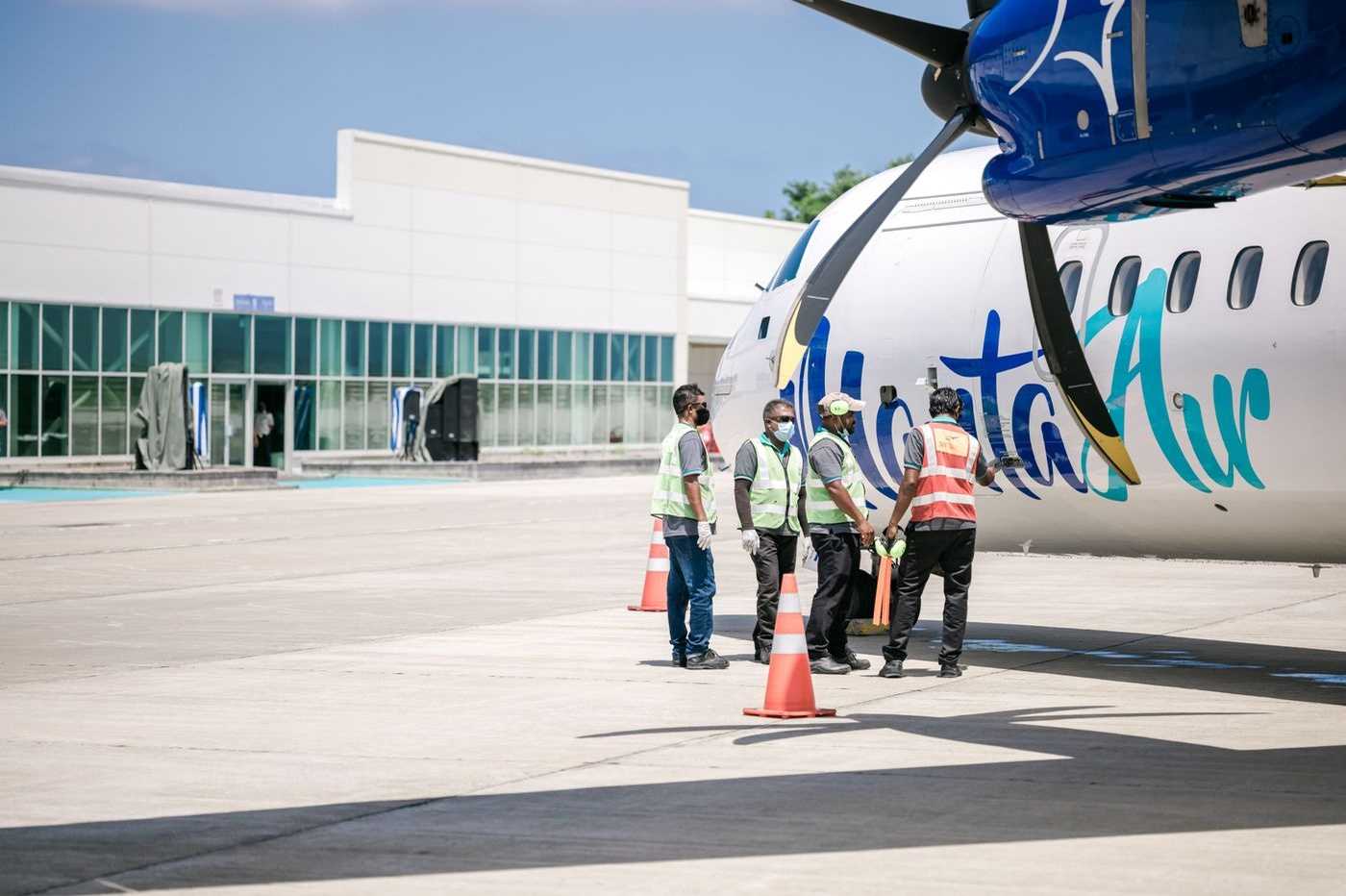
Ground handlers and ramp personnel are often the most under-served group. Human factors in ground handling involves high fatigue exposure, shift-work effects, pressure-driven errors, and communication breakdowns between ground and flight operations. Some operators are now extending formal HF training requirements to this group voluntarily, even where regulation does not yet require it.
How Aviation Organizations Track and Manage Human Factors Training Compliance
Tracking human factors training completion across an aviation organization is more complex than it sounds. You have different training modules for different roles, regulatory-mandated recurrency timelines, personnel moving between bases, and audit requirements that demand verifiable records. When organizations rely on spreadsheets or paper-based logs to manage this and things break.
In our experience working through compliance processes with aviation training teams, the single biggest operational vulnerability is training expiry. A technician or crew member whose HF training has lapsed by even a day is technically non-compliant. Regulators do not accept “we didn’t realize it had expired” as a mitigation. Audit-ready documentation requires date-stamped completion records, assessment scores where applicable, and trainer credentials.
This is where an Aviation Training Management System (TMS) earns its operational cost. A robust aviation TMS automates compliance tracking by maintaining real-time visibility of training status for every personnel record. It sends automated alerts when refresher deadlines are approaching, flags compliance gaps, and generates the reporting structures that auditors from the FAA, EASA, or ICAO expect to see.
The distinction between a TMS and a Learning Management System (LMS) matters here. An LMS is strong at delivering e-learning content, running assessments, and tracking completion of digital modules. A TMS does all of that and also manages the broader training lifecycle: scheduling, instructor assignment, simulator booking, competency grading, and certification tracking. For human factors training specifically, where you need both content delivery and robust compliance documentation, a platform that combines LMS and TMS capabilities provides the most operationally complete solution.
What Role Does a TMS Play in Managing Human Factors Training at Scale?
For operators managing human factors training across dozens or hundreds of personnel, a dedicated Aviation Training Management System is not a luxury. It is the infrastructure that makes scalable compliance possible. The difference between an organization that breezes through regulatory audits and one that scrambles every time an inspector visits often comes down to how well their training records are structured and accessible.
An aviation TMS designed for human factors compliance should handle several specific functions. First, it needs to support role-based training curricula, so that maintenance personnel automatically get enrolled in Dirty Dozen and EASA Part-145 HF modules while pilots get CRM-aligned content and cabin crew get their own track. Second, it needs automated recurrency management: the system should know that EASA Part-145 requires a two-year HF refresher and proactively trigger that workflow without a training manager having to check manually.
Third, it needs audit trail integrity. Every completion event, assessment score, trainer attestation, and refresher cycle should be timestamped and immutable. When an FAA Aviation Safety Inspector or EASA auditor reviews training records, they need to see structured, verifiable documentation, not a folder of PDFs.
Platforms operating in this space include MINT TMS (by Comply365), which is widely adopted across major airlines and MROs for its scheduling and compliance automation capabilities, as well as Aviatize, Flyco, and SimpliTrain, which offer integrated TMS and LMS functionality tailored to aviation training requirements. Each platform takes a somewhat different approach to balancing content delivery with compliance workflow automation, so the right choice depends on your organization’s size, regulatory environment, and existing systems.
| Platform Feature | Why It Matters for HF Training |
|---|---|
| Role-based curriculum enrollment | Ensures right training reaches right personnel automatically |
| Automated recurrency alerts | Prevents compliance lapses before they become audit findings |
| Integrated assessment tracking | Documents competency outcomes, not just attendance |
| Audit-ready reporting | Reduces manual effort during regulatory oversight |
| Multi-regulation support (FAA, EASA, ICAO) | Single platform for globally operating organizations |
The aviation training management system market is evolving quickly. More platforms are integrating evidence-based training frameworks, competency matrices, and observable behavior tracking into HF training records, moving the industry closer to a genuinely continuous human performance model rather than periodic compliance events.
How to Build and Improve Your Human Factors Training Program Over Time
Building a human factors training program that actually works requires more than sourcing a syllabus and ticking regulatory boxes. The programs we have seen deliver the strongest safety outcomes share a few consistent characteristics that go beyond content coverage.
Start with a needs analysis tied to your SMS data. Your Safety Management System should already be capturing incident and near-miss reports. Mine those reports for recurring human factors themes: are you seeing more fatigue-related errors during night shifts? More communication breakdowns during handovers? Your HF training content should be weighted toward the failure modes your own operation is actually producing.
Use scenario-based learning rather than pure lecture. Human factors concepts are much more effectively retained when they are encountered through realistic case studies, table-top exercises, or simulator scenarios. The FAA’s own guidance on CRM training emphasizes this. Classroom-only delivery of HF content consistently underperforms when measured against behavioral change in operations.
Track training effectiveness, not just completion. Most organizations can tell you what percentage of their workforce has completed human factors training. Far fewer can tell you whether that training changed behavior. Consider pre-and-post knowledge assessments, safety reporting rate trends as a proxy for safety culture engagement, and periodic competency observations as metrics for program effectiveness.
Build for recurrency from the start. The two-year EASA recurrent cycle for maintenance HF and the annual CRM refresher cycle for flight crew are not designed to deliver a full curriculum every time. Refresher sessions should be designed to build on previous training, introduce new case material, and address any operational safety trends that have emerged since the last cycle. A good TMS makes it straightforward to differentiate initial and recurrent content by role.
Finally, create feedback loops between your training department and your safety department. Human factors certification and competency data sitting inside your TMS should be visible to your safety team, so they can correlate training compliance with incident trends and adjust program design accordingly. This is the operational definition of a continuous safety improvement culture, and it is what ICAO Annex 19 and SMS frameworks are pushing every operator toward.
Frequently Asked Questions
Q1. What is human factors training in aviation?
Human factors training in aviation is structured education that teaches personnel how human limitations, cognitive biases, and behavioral patterns affect operational safety. It covers areas like crew resource management, situational awareness, fatigue management, and error recognition. It applies to pilots, maintenance technicians, air traffic controllers, cabin crew, and ground operations staff.
Q2. How often is human factors training required in aviation?
Requirements vary by regulatory body and role. Under EASA Part-145, maintenance personnel must complete a refresher every two years. FAA Part-121 operators require recurrent CRM training for flight crew, typically aligned with the annual recurrent training cycle. ICAO standards are implemented differently by each member state, but most align with a 12-to-24-month recurrent cycle.
Q3. What are the 12 human factors in aviation (the Dirty Dozen)?
The Dirty Dozen is a framework for maintenance human factors that identifies twelve common preconditions for error: lack of communication, complacency, lack of knowledge, distraction, lack of teamwork, fatigue, lack of resources, pressure, lack of assertiveness, stress, lack of awareness, and established norms. It is widely used in aviation maintenance human factors training programs under FAA and EASA guidelines.
Q4. What is the difference between human factors training and CRM training?
Crew resource management training is a subset of human factors training focused specifically on team-based competencies for flight crew and cabin crew: communication, decision-making, situational awareness, and workload management. Human factors training is broader and applies across all aviation roles, covering individual human performance limitations, organizational factors, and error management principles.
Q5. How do aviation organizations track human factors training compliance?
Most mature aviation organizations use a Training Management System (TMS) to track HF training compliance. A TMS maintains role-based training records, automates recurrency alerts, tracks assessment outcomes, and generates audit-ready reports. This is more operationally robust than manual tracking, especially for organizations with large or geographically distributed workforces.
Q6. What happens if human factors training records are not maintained properly?
Inadequate human factors training records can result in regulatory findings during audits by the FAA, EASA, or national civil aviation authorities. In serious cases, it can affect an organization’s operating approvals or Part-145 certification. Beyond regulatory risk, poor record-keeping obscures whether training is actually reaching the right people at the right time, which is a direct safety exposure.
Conclusion
Human factors training in aviation is where safety culture and regulatory compliance intersect. The data on human error as a contributor to aviation accidents makes a compelling case for taking this training seriously at every level of an organization, not just in the cockpit. Understanding the regulatory landscape across FAA, EASA, and ICAO frameworks, building content that addresses your specific operational risks, and deploying a TMS capable of managing compliance documentation at scale are the three pillars of a program that actually delivers outcomes.
The organizations that treat human factors training in aviation as a continuous safety investment, rather than a periodic compliance event, are the ones consistently building stronger safety cultures, performing better in audits, and operating with lower incident rates over time.