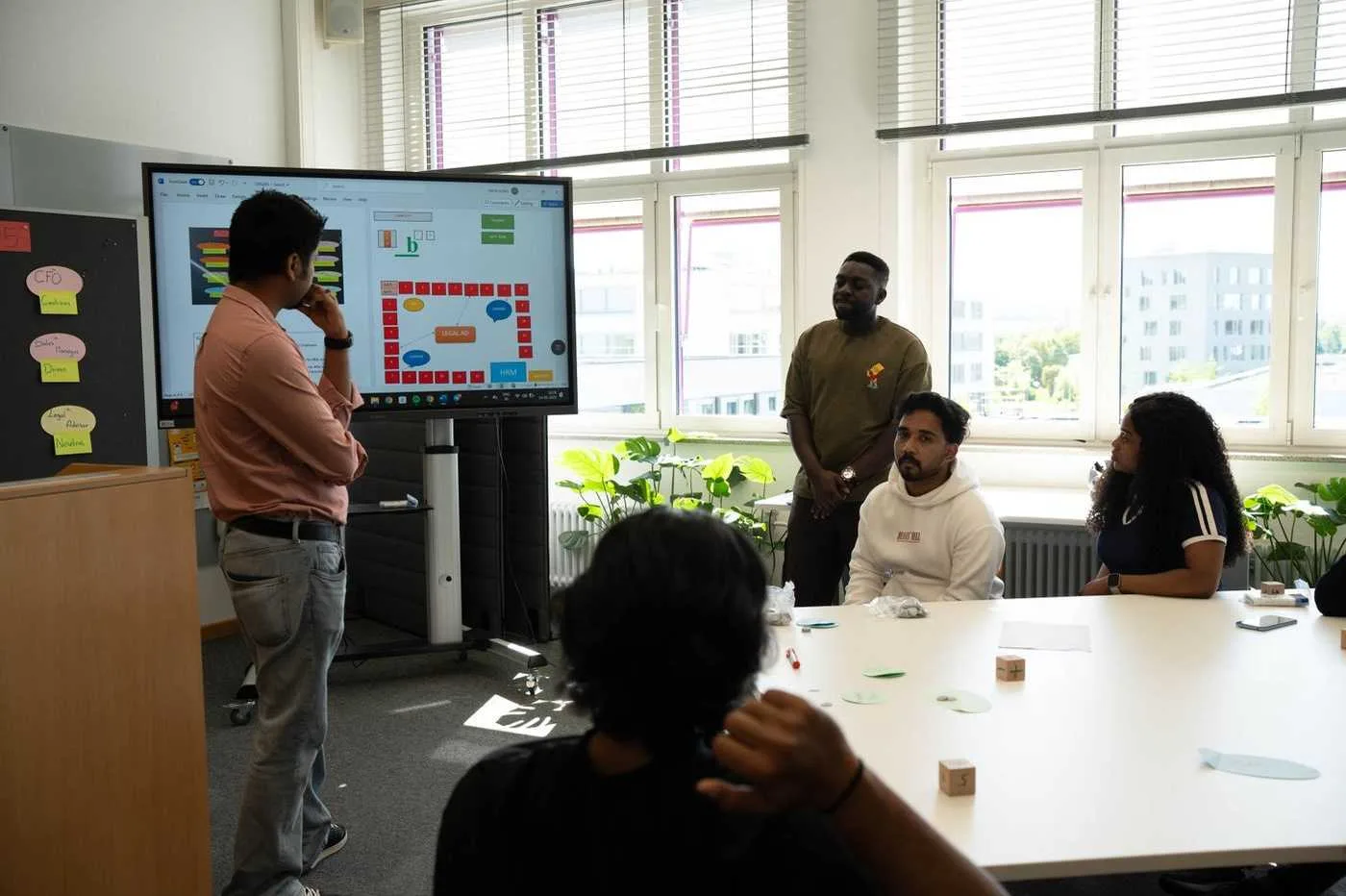
Peer learning vs ILT comes down to one core trade-off. Peer learning scales contextual, day-to-day knowledge cheaply through colleagues, while instructor-led training (ILT) delivers structured, expert-vetted depth at a higher cost per learner. Neither format replaces the other. In our experience building L&D programs across onboarding, compliance, and leadership tracks, the strongest training strategies treat peer learning and ILT as complementary layers, not competing formats, and use each one where it naturally performs best.
Peer Learning vs ILT: What’s the Real Difference?
Peer learning is informal or semi-structured knowledge sharing between colleagues with similar experience levels. ILT is formal, scheduled instruction led by a subject matter expert or professional facilitator. The real difference isn’t the format, it’s the source of authority. Peer learning draws on lived, current experience inside the team. ILT draws on validated expertise designed to be consistent across every learner who sits in the room.
When we’ve audited L&D programs for clients, peer learning almost always shows up informally before anyone names it as a strategy. New hires ask the person at the next desk how a process actually works in practice, not what the manual says. ILT, by contrast, gets scheduled, budgeted, and tracked because it’s the format leadership can point to as “real training.” Research from Brandon Hall Group found that 95.5 percent of companies use in-person or instructor-led classroom-style training, while 60.7 percent also use peer learning modalities and 79.5 percent use coaching or mentoring, which confirms that most organizations are already blending formats whether they call it that or not.
The distinction matters for how you design a program. Peer-to-peer training thrives on proximity and recency. ILT thrives on consistency and depth. A community learning vs classroom framing oversimplifies things if it implies you have to pick a side.
| Dimension | Peer Learning | Instructor-Led Training (ILT) |
|---|---|---|
| Knowledge source | Colleagues and recent experience | Subject matter expert and structured curriculum |
| Cost per learner | Low | Higher (facilitator, venue, and scheduling costs) |
| Scalability | High, informal | Limited by instructor availability |
| Best for | Tacit knowledge sharing and quick problem-solving | Complex skills, compliance, and leadership development |
| Accountability | Social and peer-driven | Structured and assessed |
| Content freshness | Very current | Depends on the curriculum update cycle |
| Misinformation risk | Higher without structure | Lower through expert-vetted content |
When Does Peer Learning Outperform Instructor-Led Training?
Peer learning outperforms ILT when the goal is fast, contextual problem solving rather than formal certification. If a learner needs to know how a specific team actually handles an edge case today, a peer with recent hands-on experience answers that faster and more usefully than a curriculum written month earlier.
This is part of why peer collaboration has been growing. CIPD data shows organizations’ use of peer collaboration moved from roughly 30 percent to 36 percent between 2021 and 2024, and that peer-to-peer learning has become more common than apprenticeships or as-needed performance support in many organizations. In our experience running onboarding cohorts, the questions new employees ask in the first two weeks are rarely covered by formal modules. They’re operational and specific, and a peer who solved the same problem last month is the fastest path to an answer.
Social knowledge sharing training also works well for soft skills practice, internal tool quirks, and process workarounds that change faster than a curriculum can be updated. It’s cheap to run, scales with headcount instead of instructor availability, and builds horizontal relationships that formal sessions rarely create.
Where Does ILT Still Win in the Peer Learning vs ILT Debate?
ILT still wins for complex technical skills, leadership development, and high-stakes compliance training, where a learner needs expert-level correction in real time rather than a colleague’s best guess. Administrate’s research on training delivery found that instructor-led training proves most valuable for exactly these three scenarios: complex technical processes that need hands-on guidance, leadership skills like conflict resolution that benefit from live coaching, and compliance training where organizations must verify comprehension and correct misunderstandings before they become a liability.
We’ve seen this play out directly. When we’ve implemented compliance refreshers for regulated teams, peer-only formats left gaps an instructor would have caught immediately, things like outdated procedural assumptions getting passed from one peer to the next without anyone flagging the error. That’s the core weakness of unstructured peer-to-peer training: it can scale a mistake just as efficiently as it scales good practice. ILT’s structure, with an accountable expert in the room, is what prevents that.
How Do You Combine Peer Learning With ILT in One Program?
You combine peer learning with ILT by using each format for what it does best inside the same program, rather than running them as separate initiatives. ILT anchors the expert content and high-stakes correction. Peer learning extends and reinforces it between sessions.
Mentorship Circles Inside ILT Cohorts
Pair learners from the same ILT cohort into small mentorship groups that meet between formal sessions. The instructor sets the curriculum; the peer group keeps it alive day to day.
Peer-Led Practice Labs After Expert Sessions
After a facilitator covers a complex skill, hand the practice time to peer groups who work through scenarios together while the instructor floats between rooms answering questions rather than lecturing.
Structured Office Hours With the Instructor
Keep a scheduled window where peer groups can escalate anything they couldn’t resolve among themselves directly to the expert, so unresolved questions don’t quietly become bad habits.
This is the model behind most modern collaborative L&D strategy: cohort-based blended programs where digital learning and instructor sessions work together, with peer learning filling the space between them rather than competing with either one.
What Does a Blended Peer Learning and ILT Schedule Look Like?
A blended schedule alternates short instructor-led sessions with longer peer practice windows, coordinated through a training management system rather than a calendar invite and a spreadsheet. Once you’re running parallel peer cohorts and instructor schedules across multiple sites or time zones, manual coordination breaks down fast.
This is where a TMS earns its place in the stack, distinct from an LMS. A TMS handles instructor availability, room or virtual session logistics, cohort assignment, and resource scheduling, the operational backbone a blended program actually needs. Platforms built for this, including Training Orchestra, Arlo, Administrate, Accessplanit, SkyPrep, and SimpliTrain, all support some version of scheduling instructor-led sessions alongside cohort or group-based activities, which is exactly the coordination layer peer-plus-ILT programs require. An LMS still matters for hosting any self-paced material that supports the blend, but the scheduling complexity of running peer and instructor formats together is squarely a TMS problem.
A strong blended cadence, based on what we’ve seen work, looks roughly like: instructor session, peer practice lab, instructor office hours, peer accountability check-in, repeat. The instructor anchors quality; the peer layer keeps the rhythm going without burning instructor hours on every touchpoint.
How Do You Measure Whether the Blend Is Actually Working?
You measure the blend by tracking peer-driven engagement and instructor-driven competency as two separate metrics, then checking whether they move together. A single combined completion score hides which layer is actually doing the work.
For the peer layer, track participation rate in peer sessions, frequency of peer-flagged questions escalated to instructors, and qualitative feedback on whether peer groups feel useful or just procedural. For the ILT layer, track assessment scores, time-to-competency, and instructor-rated readiness. D2L’s 2026 research on workplace learning found that while 71 percent of organizations offer leadership training, only 26 percent offer the more coordination-heavy formats like job rotations or peer learning groups, suggesting the harder part isn’t designing the peer layer, it’s sustaining and measuring it once ILT is no longer carrying the entire program.
In our experience, the clearest signal that a blend is working is a drop in repeat questions reaching instructors over time. That means the peer layer is successfully absorbing routine knowledge transfer and the ILT layer is being reserved for genuinely complex cases, which is exactly the division of labor you want.
The AI learning vs ILT debate intersects with peer learning in interesting ways, since AI-facilitated peer platforms are increasingly being positioned as alternatives to instructor-led group instruction.
What Are the Biggest Risks of Getting the Mix Wrong?
The biggest risk is letting peer learning quietly substitute for ILT in situations that require expert verification, especially compliance or safety-critical training where an unflagged error has real consequences. The second biggest risk runs the other way: over-relying on ILT for routine knowledge that peers could handle just fine, which burns instructor budget and slows down scaling unnecessarily.
A subtler risk is treating peer learning as free. It isn’t. It costs employee time, and without light structure, mentorship circles and practice labs can drift into unproductive chat rather than skill reinforcement. The fix isn’t more oversight, it’s clearer scope. Decide up front which topics are peer-eligible and which always route through an instructor, document it, and revisit the split as your program matures.
Frequently Asked Questions
Q1. Is peer learning as effective as instructor-led training?
It depends on the skill. Peer learning is highly effective for contextual, fast-changing knowledge, but research consistently shows ILT remains stronger for complex technical skills, leadership development, and compliance training where expert correction matters.
Q2. What is the 70-20-10 rule in corporate learning?
It’s a common framework suggesting people learn roughly 70 percent through direct experience, 20 percent through peers and social interaction, and 10 percent through formal instruction like ILT or structured courses.
Q3. Can peer learning replace formal compliance training?
No. Compliance training generally requires verified comprehension and an accountable instructor of record. Peer learning can reinforce compliance concepts between sessions, but it shouldn’t replace the formal, assessed ILT component
Q4. How do you measure peer learning ROI?
Track engagement metrics like participation and question-escalation rates alongside downstream outcomes like reduced time-to-competency or fewer repeat support tickets, rather than relying on a single attendance or completion number.
Q5. What's the difference between peer learning and mentoring?
Peer learning typically happens between colleagues at similar levels sharing recent experience. Mentoring usually pairs a less experienced person with someone more senior, closer in structure to a scaled-down version of expert-led instruction.
Q6. How much of a blended program should be peer-led vs instructor-led?
There’s no universal ratio, but the 70-20-10 model is a reasonable starting point, with ILT reserved for complex or high-stakes content and peer learning carrying routine reinforcement and contextual knowledge sharing.
Conclusion
Peer learning vs ILT was never really a competition. It’s a resourcing question: which format is the right tool for this specific piece of knowledge, right now. Peer learning gives you scale and currency. ILT gives you depth and accountability. The programs that get the most value treat the two as layers in the same system, coordinated through the right scheduling and tracking tools, rather than as a choice between community knowledge and expert instruction.
The ILT vs. coaching comparison completes the development format picture that peer learning sits within, since all three formats serve different learning objectives and should be sequenced rather than chosen in isolation.