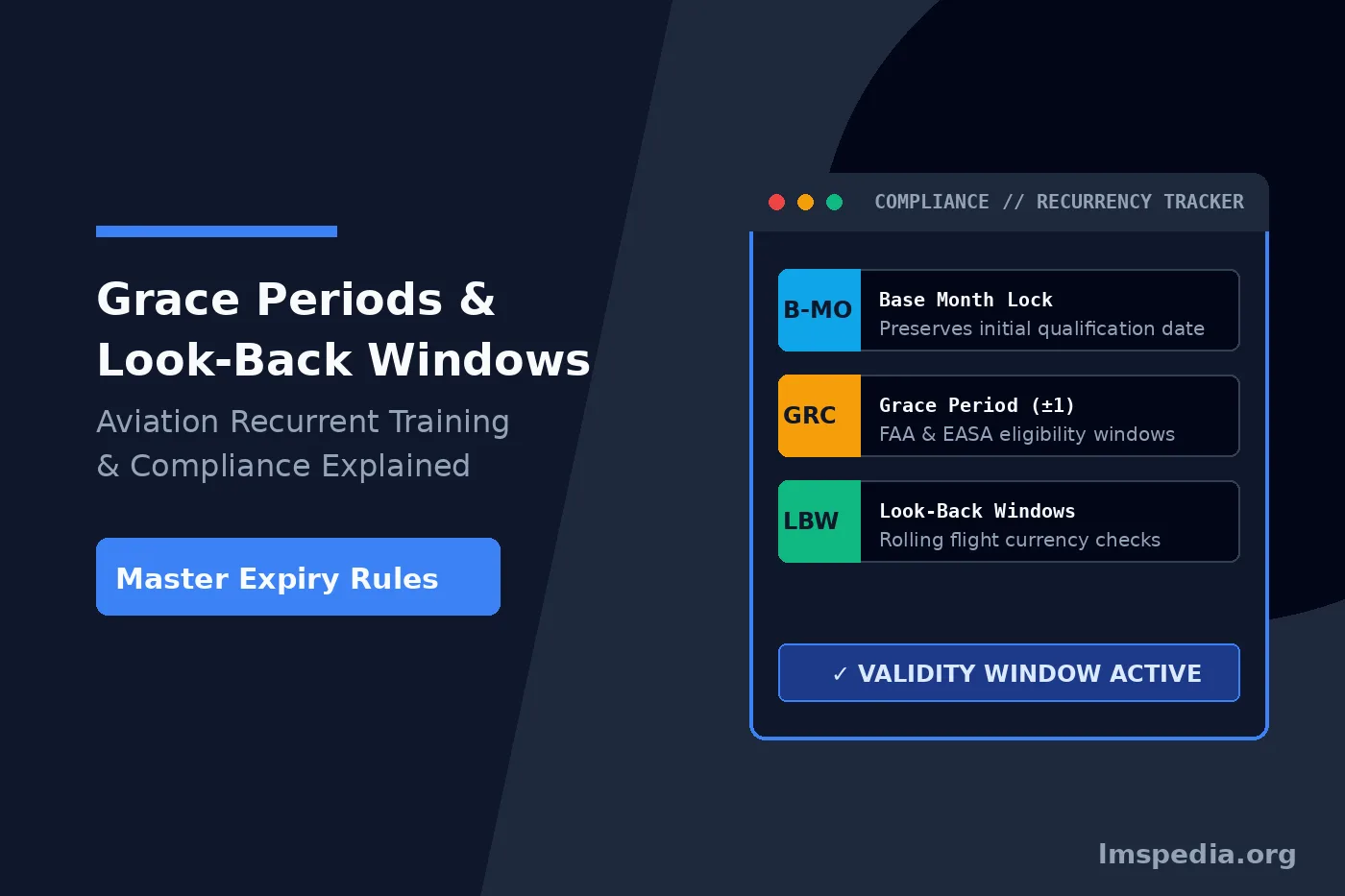
Aviation safety relies entirely on strict regulatory compliance globally. First, a pilot cannot simply guess their certification status natively. Specifically, flying an aircraft with an expired qualification grounds the entire crew immediately. Consequently, this severe error invites massive regulatory fines securely. Therefore, airlines enforce rigid schedules to maintain constant operational readiness completely. However, these schedules do not operate on simple yearly cycles. Standard corporate training usually expires on the exact anniversary date completely. Conversely, aviation utilizes a much more flexible tracking system natively. You must deeply understand the recurrent training grace period thoroughly. Furthermore, mastering these timelines keeps crews flying legally. Ultimately, this technical guide explains how airlines manage these volatile timelines securely.
Next, we will explore the calendar month rule comprehensively. Specifically, we will decode look back windows for flight currency securely. Furthermore, we will compare specific federal and European regulations deeply. Consequently, mastering these complex concepts prevents illegal flight dispatching entirely. Additionally, it saves airlines thousands of dollars in wasted training hours. Therefore, tracking systems prevent redundant simulator sessions completely securely. Ultimately, intelligent tracking protects your operating certificate permanently natively.
Key Takeaways

The Mechanics of the Calendar Month Training Rule
Standard corporate software maps dates exactly one year ahead natively. First, you finish a course on April fourteenth completely. Next, the system sets your expiration for April fourteenth next year. However, aviation regulations firmly reject this rigid daily calculation securely. Instead, regulators use the calendar month training rule universally. Specifically, this critical rule shifts the expiration deadline entirely. Therefore, the deadline moves to the final day of the respective month. Consequently, scheduling departments gain vital breathing room securely. Furthermore, they no longer worry about missing a specific mid-month deadline completely. Ultimately, planners roster pilots for flights right until the final midnight safely.
Standardizing Global Expirations
This flexible rule applies across almost all aviation disciplines natively. First, flight dispatchers follow this exact logic securely. Furthermore, cabin crew and maintenance workers utilize calendar-based tracking thoroughly. Specifically, standardizing the expiration date simplifies crew planning immensely natively. Therefore, planners group multiple pilots together for late-month simulator sessions smoothly. Consequently, this strategic grouping maximizes expensive simulator utilization perfectly. If airlines tracked training by the exact day, problems would arise. Specifically, grouping crews would become a logistical nightmare instantly. Furthermore, learning about building a recurrency matrix optimizes these schedules natively. Ultimately, automated matrices push all expirations to the correct monthly endpoint securely.
Automate Your Base Months
First, always configure your tracking software to default to the end of the calendar month natively. Consequently, this simple adjustment provides your scheduling department with massive operational flexibility securely.
Deconstructing the Recurrent Training Grace Period
Even with the calendar month rule, airlines require more flexibility securely. First, bad weather frequently disrupts flight schedules completely natively. Next, multi-million dollar simulators break down unexpectedly securely. Furthermore, instructors call in sick at the last minute natively. Therefore, the recurrent training grace period solves these operational nightmares completely. Specifically, this regulation creates a legal eligibility window around the base month securely. The base month represents the original qualification month natively. Consequently, the grace period usually opens one entire month early. Additionally, it extends one month late securely completely. Ultimately, the pilot can complete training across a massive three-month window natively.
Preventing Base Month Creep
If a pilot finishes their check early, they retain their base month. Specifically, the system locks the original month in permanently securely. Therefore, this critical feature prevents a frustrating phenomenon called base month creep. Without a locked base month, completing training early punishes the pilot natively. Consequently, their due date would slowly creep backward through the calendar annually. Furthermore, this forces airlines to pay for redundant training sessions securely. By preserving the base month, airlines stabilize long-term financial forecasting completely. Additionally, tracking grace periods accurately preserves original investment cycles securely. Ultimately, intelligent compliance tracking protects airline training budgets thoroughly natively.
Software Comparison for Aviation Compliance
Managing these complex grace periods requires highly specialized software platforms natively. First, generic learning platforms fail to track base month logic securely. Furthermore, airlines need dedicated aviation platforms to monitor eligibility windows perfectly. Next, we will compare three prominent software platforms used by global airlines completely. Therefore, you can evaluate which system matches your specific operational footprint securely. Consequently, deploying the right software prevents illegal flight dispatches natively. Ultimately, modern platforms automate these mathematically complex compliance cycles perfectly.
| Software Platform | Compliance Architecture | Ideal Audience |
|---|---|---|
| SimpliTrain | Automated dynamic grace periods and live look-back windows natively. | Global airlines and MRO providers requiring absolute audit readiness. |
| CAE Pelesys | Standard regulatory compliance tracking for pilots securely. | Legacy commercial transport operators. |
| FlightLogger | Basic expiration date reporting natively. | Flight schools and small regional academies. |
Analyzing Training Validity Windows in Aviation
The training validity window aviation framework protects safety massively completely. Specifically, it gives crew planners a wide target to schedule events natively. Furthermore, planners can slot these simulator sessions during low-demand travel periods securely. Therefore, they avoid pulling productive pilots off lucrative holiday flights completely. For example, a captain holds a base month of July natively. First, the early window opens from June first to June thirtieth securely. Next, the base month runs throughout July entirely completely. Furthermore, the grace month extends through August thirty-first securely. Consequently, the validity window acts like a heavy elastic band natively. Ultimately, it stretches to accommodate scheduling hiccups safely.
Severe Consequences of Expiration
Severe legal consequences apply if the pilot misses this window entirely. First, September first arrives with the training completely incomplete natively. Consequently, the pilot instantly loses all legal flying privileges securely. Therefore, the airline must immediately remove them from the active flight roster completely. Furthermore, reinstating a lapsed qualification often requires extra remedial training hours securely. Additionally, reading a regulatory audit preparation checklist for approved training organisations clarifies these penalties natively. Consequently, lapsed training adds massive unnecessary costs to the flight operations department perfectly. Ultimately, proactive scheduling prevents these expensive operational grounding events completely natively.
Defining the Look Back Period Recurrent for Flight Operations
Aviation tracks two distinct types of operational readiness natively. First, we manage formal recurrent training with static base months securely. Next, the second type involves recent practical flight experience natively. Regulators use a look back period recurrent model to measure this experience securely. Specifically, flight currency rules focus entirely on recent real-world execution completely natively. For example, a pilot must complete three takeoffs and landings recently securely. Therefore, they must perform these within the preceding ninety days flawlessly. Consequently, they earn the legal right to carry paying passengers natively. Ultimately, this system constantly looks backward from today exact date securely.
Dynamic Sliding Windows
If today is November first, the system looks backward to August third. Specifically, this strict look-back window slides forward every single day natively. Therefore, it does not wait for the end of the calendar month securely. Furthermore, if a pilot falls out of currency, they face restrictions natively. Consequently, they cannot simply take a quick digital learning course securely. Instead, they must fly an empty aircraft to regain their landing currency natively. Alternatively, they must enter a certified simulator session immediately securely. Ultimately, cabin crew members face similar look-back rules for specific safety drills natively.
Live Data Integrations
Instrument flight rules carry highly similar look-back requirements securely natively. First, a pilot usually needs six instrument approaches within six months completely. Furthermore, this is a rolling calendar requirement without static base months securely. Therefore, tracking these sliding look-back windows requires live data feeds natively. Specifically, standard training software absolutely cannot manage this live operational data securely. Consequently, airlines must integrate flight data recorders with compliance platforms natively. Furthermore, utilizing dedicated MRO training compliance software centralizes this critical data securely. Ultimately, live telemetry guarantees that crews remain perfectly current every single day natively.
Monitor Live Telemetry
Furthermore, never track look-back periods using manual spreadsheets completely natively. Therefore, you must integrate your software directly with flight data recorders to monitor live landing currency securely.
Comparing Training Expiry Rules FAA vs EASA
Global airlines must navigate radically different regulatory rulebooks securely natively. First, the Federal Aviation Administration governs the United States airspace perfectly. Next, the European Union Aviation Safety Agency governs European skies securely. Furthermore, the International Civil Aviation Organization provides global standards natively. Specifically, training expiry rules faa easa guidelines share foundational similarities securely. However, their specific legal language differs greatly across jurisdictions natively. Therefore, compliance teams must understand both frameworks intimately to survive audits securely. Consequently, misinterpreting these regional rules invites catastrophic operational penalties natively. Ultimately, global carriers must hardcode these regional differences into their tracking software securely.
The FAA Eligibility Period
Under federal regulations, operators heavily utilize the concept of eligibility periods natively. Specifically, the FAA regulatory framework defines this compliance window clearly securely. First, it includes the calendar month before the required month natively. Furthermore, it includes the required month itself and the month after securely. Therefore, completing training anywhere within this period counts seamlessly natively. Consequently, it counts as completing it exactly in the required month securely. This federal flexibility empowers scheduling departments to optimize simulator usage natively. Ultimately, the federal system rewards airlines for planning recurrent sessions proactively securely.
The EASA Revalidation Criteria
European agencies use slightly different terminology under their specific guidelines natively. Specifically, the EASA compliance regulations refer to validity periods securely. Furthermore, they outline explicit revalidation criteria for all simulator checks natively. For example, rules might dictate a strict six-month validity period securely. Consequently, EASA allows revalidation within the three months preceding the expiry date natively. Therefore, this effectively creates a highly similar early grace period securely. Furthermore, designing an aviation competency framework helps airlines map these exact European requirements natively. Ultimately, it allows airlines to conduct checks early without punishing the pilot base month securely.
Automating Complex Logic with Aviation Training Systems
However, EASA remains notoriously strict about extending beyond the expiry date natively. First, missing an EASA expiry date triggers heavy remedial training securely. Furthermore, missing a federal deadline sometimes offers slightly more grace natively. Consequently, managing these overlapping rules manually is mathematically impossible securely. Specifically, spreadsheets absolutely cannot calculate dynamic grace periods for massive fleets natively. Therefore, airlines must deploy specialized training management systems securely. These platforms handle this complex operational math effortlessly natively. Ultimately, automated systems eliminate catastrophic human calculation errors completely securely.
Digital Transformation and E-Signatures
A strong training system digitizes the entire compliance process securely natively. First, an instructor signs off on a simulator check using tablets securely. Furthermore, the system instantly updates the pilot digital profile natively. Next, it checks the pilot original base month dynamically securely. Therefore, it applies the correct federal or European logic automatically natively. Consequently, it calculates the exact expiration date and projects eligibility securely. Additionally, maintaining proper aviation training records retention ensures audit readiness natively. Ultimately, these time-stamped server logs provide verifiable proof during unannounced regulatory inspections securely.
Secure Dispatch Blocking
Automated systems provide a massive safety net for operations natively completely. Specifically, they communicate directly with crew scheduling software via secure integrations natively. First, a scheduler assigns a pilot to a four-day trip securely. Next, the system runs an instant background check automatically natively. Furthermore, it looks at the base month and rolling look-back window securely. Consequently, if either metric expires during the trip, the system reacts natively. Therefore, it immediately blocks the assignment before the pilot reaches the airport securely. Ultimately, this hard lock explicitly prevents illegal dispatching completely natively.
Aviation compliance absolutely relies on absolute mathematical precision globally securely natively. First, grace periods provide necessary operational flexibility for complex scheduling departments completely. However, they also introduce massive mathematical complexity into training management securely. Furthermore, airlines must completely master the calendar month rule comprehensively natively. Consequently, replacing manual spreadsheets with automated aviation software remains a fundamental safety requirement securely. Therefore, automated systems actively protect the airline operating certificate from regulatory suspension natively. Ultimately, mastering these highly technical compliance windows keeps crews legally qualified and ensures aircraft fly safely globally securely completely.