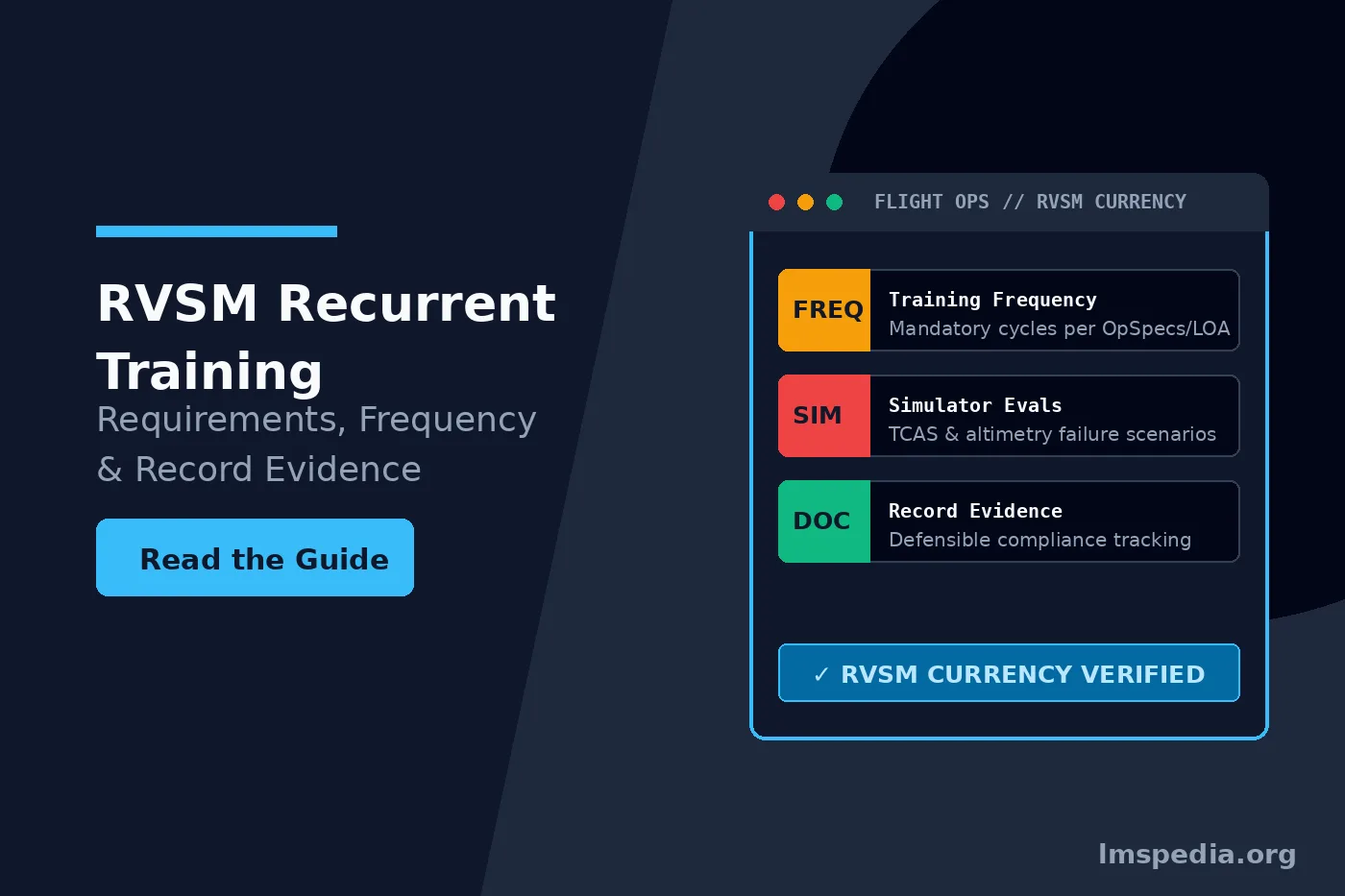
Operating an aircraft in the specialized airspace between Flight Level 290 and Flight Level 410 requires extraordinary precision. In this vertical band, standard vertical separation drops from 2,000 feet to a mere 1,000 feet. This compressed airspace allows air traffic control to route more aircraft efficiently, saving airlines millions in fuel costs globally. However, this reduced separation introduces immense operational risk. To mitigate this risk, global aviation authorities demand strict adherence to Reduced Vertical Separation Minimum protocols. Consequently, flight crews cannot simply learn these rules once. They must undergo rigorous rvsm recurrent training to maintain their operational privileges safely.
Failing to maintain active currency in these procedures can result in severe regulatory penalties, loss of airspace access, and catastrophic safety failures. Aviation authorities, including the Federal Aviation Administration (FAA) and EASA, conduct ramp checks and routine audits to verify that flight crews possess the necessary knowledge to handle complex altimetry errors or altitude deviations. To structure this highly technical curriculum perfectly, instructional designers must apply strict cognitive frameworks. Review our guide on Bloom’s taxonomy for corporate training to ensure your course objectives are fully measurable.
Managing these strict cycles across a massive fleet requires robust digital infrastructure. To understand how modern flight departments handle complex regulatory tracking efficiently, review our guide covering the best aviation training management systems available today. In this comprehensive reference guide, we will break down the exact operational mandates surrounding this critical airspace. We will explore the core requirements, detail how to manage your overarching authorization, and explain exactly what inspectors look for when reviewing your compliance evidence.
Key Takeaways

Strict Syllabus Requirements:
Your RVSM recurrent training curriculum must explicitly cover altimetry system errors, mandatory equipment lists, TCAS integration, and specific contingency procedures for mountain waves and wake turbulence.
Adhere to Your LOA/OpSpecs:
Do not rely on generic regulations for your expiration dates. Your specific Letter of Authorization or Operations Specifications dictates exactly how often you must complete recurrent modules to maintain RVSM currency.
Generate Defensible Evidence:
Aviation auditors require detailed, timestamped RVSM training records that link the specific pilot to an approved syllabus, including the instructor’s signature and final evaluation scores.
Mandatory Simulator Integration:
Theoretical quizzes are insufficient. Crews must demonstrate practical proficiency in a simulator by handling realistic emergencies, such as emergency descents and altimetry failures, within strict altitude tolerances.
Transition to Digital Records:
Paper tracking is a massive liability. Utilize modern aviation training management systems to secure your compliance data, track currency expirations automatically, and ensure instant audit readiness.
Understanding Core RVSM Training Requirements
To operate safely with only 1,000 feet of vertical separation, flight crews must master a highly specific set of theoretical and practical skills. Regulatory bodies do not accept generic high altitude briefings. Your curriculum must cover explicit operational contingencies and equipment limitations. Understanding these strict rvsm training requirements is the absolute foundation of your departmental safety culture.
Critical Syllabus Components
Whether a pilot is flying a light corporate jet or a massive commercial airliner, their educational syllabus must address several mandatory knowledge areas perfectly. If your internal curriculum misses any of these components, your program will fail a regulatory audit instantly. Standard rvsm recurrent training must always cover the following topics.
- Altimetry System Errors: Crews must understand how static source error corrections work and how to identify discrepancies between the primary altimeters and standby instruments.
- Equipment Requirements: Pilots must know the minimum equipment list required to enter the airspace, including dual independent altitude measurement systems, an altitude alerting system, and an automatic altitude control system.
- In-Flight Contingencies: The syllabus must cover exact communication protocols for waking turbulence encounters, severe mountain wave activity, and loss of automated altitude control.
- TCAS Integration: Crews must understand how the Traffic Alert and Collision Avoidance System interacts with reduced vertical separation and how to respond to Resolution Advisories properly.
Navigating RVSM Authorization Training
Gaining access to this specialized airspace is not an automatic right. Operators must apply for and receive explicit permission from their respective civil aviation authority. For commercial operators, this permission lives in their Operations Specifications. For corporate and general aviation operators, it requires a specific Letter of Authorization. The foundation of this approval relies heavily on the operator completing strict initial rvsm authorization training.
Initial vs Recurrent Frameworks
During the initial application phase, the operator must submit their complete training manual to the regulator for approval. The initial training module is typically longer and far more comprehensive than the recurrent module. It establishes the baseline theoretical knowledge required to operate the specific aircraft type within the specialized airspace.
Once the authority grants the authorization, the operator must sustain that baseline knowledge permanently. This is exactly where a highly structured rvsm recurrent training program becomes mandatory. The recurrent program reinforces critical memory items and introduces new regulatory updates that have occurred since the initial authorization was granted.
Determining RVSM Currency and Frequency
One of the most common questions raised by aviation training managers concerns the exact timeframe for retraining. Unlike some generic safety topics that expire annually across the board, the required frequency for this specific curriculum depends entirely on the specific regulatory framework under which the operator flies. To compare these timelines with other pilot requirements, read our detailed breakdown of pilot recurrent training requirements frequency.
Standard Recurrent Timeframes
To maintain absolute rvsm currency, pilots must revisit the material at specific intervals dictated by their approved manuals. While you must always consult your specific Operations Specifications, the industry adheres to highly standardized baseline cycles.
| Regulatory Operation Type | Typical Required Frequency | Primary Focus of Recurrent Module |
|---|---|---|
| Part 121 Commercial Airlines | Every 12 to 24 Months | Integrated into overarching recurrent simulator and ground school cycles. |
| Part 135 Charter Operations | Every 12 Months | Review of specific company contingencies and recent regional airspace changes. |
| Part 91 Corporate Aviation | Every 24 Months | Basic knowledge retention and updates to international altimetry procedures. |
Check Your Specific LOA
Never rely strictly on general industry guidelines for your expiration dates. Your specific Letter of Authorization or Operations Specifications manual explicitly defines your required timeframe. If your manual states a 12 month cycle but the general regulation allows 24 months, you are legally bound to the stricter 12 month rule completely.
Generating Flawless RVSM Training Records
When an aviation inspector conducts a ramp check or an annual base audit, they will demand undeniable proof of your crew qualifications. A simple spreadsheet with a typed date is entirely insufficient for modern regulatory scrutiny. You must generate and secure highly defensible rvsm training records to survive these audits. This strict documentation standard mirrors other highly regulated industries. For context on cross industry compliance, review our OSHA recordkeeping and training documentation guide.
What Constitutes Defensible Evidence?
To prove compliance, your records must connect the specific pilot to a highly specific, approved syllabus on a verifiable date. Your permanent digital aviation records must contain the following critical elements natively.
- The full legal name and pilot certificate number of the crew member.
- The exact date and total duration of the educational event.
- A detailed breakdown of the specific syllabus modules covered during the session.
- The signature or secure digital credential of the certified instructor or evaluator.
- The results of any associated written examination or practical simulator evaluation.
The Role of Digital Tracking Standards
Maintaining these records in physical paper files introduces massive risk. Paper gets lost, damaged, or forged easily. Modern flight departments deploy advanced e-learning systems to deliver the theoretical portion of their recurrent programs. These systems automatically generate timestamped completion data that auditors trust implicitly.
Evaluating Performance in the Simulator
Theoretical knowledge represents only half of the regulatory requirement. An operator cannot guarantee safety solely through multiple choice quizzes. Therefore, a robust rvsm recurrent training program absolutely must incorporate practical evaluations inside a certified full flight simulator.
Simulating High Altitude Threats
During the recurrent simulator check ride, evaluators must inject specific threats designed to test the crew reaction to reduced vertical separation emergencies. Evaluators frequently trigger a slow loss of cabin pressurization, forcing the crew to execute an emergency descent through tightly packed vertical airspace safely. They will also simulate the failure of the primary altitude control system, requiring the crew to manually maintain their assigned altitude within a strict tolerance of 200 feet while notifying air traffic control immediately.
This practical application ensures that pilots do not just memorize the rules but can actually execute the procedures under severe psychological stress. This shift from simple task checking to holistic capability evaluation is transforming the entire aviation industry. To learn more about this advanced grading philosophy, read our detailed guide on competency based training in aviation.
Integrate TCAS Scenarios
When building your recurrent simulator profiles, always pair altitude equipment failures with simultaneous TCAS Resolution Advisories. Operating with only 1,000 feet of separation means a slight altimetry error can instantly trigger a collision warning. Crews must demonstrate the ability to prioritize the TCAS maneuver over the standard ATC clearance flawlessly.
Conclusion
Operating in the highly congested airspace between Flight Level 290 and Flight Level 410 is a privilege that demands absolute professional dedication. Aviation organizations must implement a meticulous rvsm recurrent training program to guarantee their crews can navigate severe altitude anomalies and equipment failures safely. By strictly adhering to your approved rvsm training requirements, you protect the flying public and shield your organization from massive regulatory liabilities.
You must monitor your rvsm currency deadlines relentlessly and tailor your simulator sessions to address realistic, high altitude threats. Finally, abandon fragile paper files entirely. Digitize your operation to ensure your rvsm training records remain completely secure, instantly accessible, and totally undeniable during your next unannounced federal aviation audit. By treating this critical education as a continuous operational priority rather than a mere administrative chore, your flight department will achieve the highest possible standards of global aviation safety.
FAQ
Q1. What is RVSM recurrent training?
RVSM recurrent training is a mandatory, recurring educational program for flight crews operating between Flight Level 290 and Flight Level 410. It ensures pilots maintain the critical theoretical knowledge and practical skills necessary to fly safely with only 1,000 feet of vertical separation between aircraft.
Q2. How often do pilots need to complete this specific recurrent module?
The frequency is dictated by the operator’s specific Operations Specifications or Letter of Authorization. Generally, Part 121 commercial airlines integrate this into their 12-to-24-month cycles, while Part 135 and Part 91 operators typically require a dedicated review every 12 to 24 months to maintain RVSM currency.
Q3. What happens if a pilot's RVSM currency expires?
If a pilot exceeds their required timeframe without completing the approved recurrent module, they immediately lose their authorization to operate in that specific airspace. They must be routed below FL290 or above FL410 until they complete the required curriculum and practical evaluations.
Q4. What specific evidence does aviation inspectors look for during an audit?
Inspectors look for highly detailed RVSM training records that include the pilot’s legal name, certificate number, the exact date of completion, the specific syllabus modules covered, the duration of the event, and the verifiable signature of the authorized instructor or evaluator.
Q5. Can RVSM authorization training be satisfied entirely through online e-learning?
No. While the theoretical knowledge portion can be delivered and tracked via compliant e-learning modules, regulatory authorities require flight crews to demonstrate their practical ability to handle altitude deviations and contingency procedures inside a certified full flight simulator.