EASA ATQP: Alternative Training and Qualification Programme Explained
Modern commercial aviation demands highly adaptive safety frameworks. Specifically, traditional regulatory checking frequently fails to mitigate emerging global threats. Therefore, the European Union Aviation Safety Agency (EASA) developed a specialized methodology. This specific framework is the easa atqp. Consequently, eligible operators can replace rigid prescriptive rules with customized, data-driven syllabi. Implementing this massive shift requires robust digital infrastructure. Next, organizations must maintain precise training records to survive strict audits. Furthermore, building a solid aviation competency framework represents the first step toward compliance. Ultimately, we will explore the strict requirements necessary to achieve full operational approval.
Key Takeaways

Move Beyond Standard Checks:
Transition your airline from rigid regulatory check rides to a highly dynamic, data driven syllabus perfectly tailored to your specific operational risks.
Leverage Internal Flight Data:
Utilize your internal flight data monitoring systems actively to identify exact competency gaps across your pilot workforce continuously.
Secure Regulatory Approval:
Follow the strict multi staged application process required to secure your specific operational certificate from the European aviation authority.
Calibrate Your Instructors:
Train your simulator evaluators strictly to ensure consistent grading standards across your entire decentralized training network perfectly.
Monitor Safety Trends:
Establish a continuous feedback loop that feeds active line operational safety audit data directly back into your simulator curriculum development natively.
Defining the Alternative Training and Qualification Programme
The Shift from Rote Checking
The core philosophy behind this modern framework relies entirely on operational reality. Under legacy regulations, every single pilot performed identical maneuvers during recurrent simulator checks. Consequently, the European regulator recognized this generic approach wasted valuable simulator hours. Therefore, they drafted specific legislation to resolve this glaring operational inefficiency. The easa atqp regulations dictate exactly how airlines build customized training curriculums. Furthermore, training managers use internal safety metrics to drive these critical curriculum decisions. Ultimately, this framework shifts focus away from checking tasks toward developing genuine competencies.
Benefits of Customization
Flight data often reveals highly specific operational vulnerabilities within an airline. For instance, crews might execute engine failures perfectly but struggle with complex weather diversions. Consequently, operators can legally adjust their syllabus immediately to address these exact deficiencies. Therefore, instructors allocate more simulator time to advanced decision-making scenarios. Additionally, airlines reduce the hours spent on highly repetitive, low-risk mechanical tasks. This flexibility provides a massive operational advantage for sophisticated commercial carriers. Crucially, customized training directly improves passenger safety across the entire fleet network.
Analyzing atqp vs standard training
The Limitations of Standard Training
The debate comparing atqp vs standard training dominates modern aviation safety conferences globally. Standard training assumes all airlines face identical risks universally. However, a regional carrier faces completely different threats than a massive international cargo operator. Furthermore, standard curriculums rely heavily on fixed intervals and rigid item checklists. Instructors must simply verify that a pilot performed a specific maneuver within numerical tolerances. Consequently, this rigid approach fosters a negative check-ride mentality among flight crews. Pilots frequently memorize the simulator profile in advance. Ultimately, they perform flawlessly in the simulator but struggle during dynamic real-world emergencies.
The Power of Dynamic Customization
The alternative approach destroys predictable instructional routines completely. Specifically, syllabus designers utilize de-identified flight data to build highly realistic scenarios. Instructors evaluate how the entire crew manages their workload under extreme stress. Furthermore, adopting advanced competency based assessment training techniques allows evaluators to grade communication effectively. Therefore, examiners judge overall threat mitigation rather than isolated physical maneuvers. This holistic evaluation produces significantly more resilient flight crews natively. Additionally, dynamic scenarios prevent pilots from anticipating the next simulator malfunction.
| Platform | Syllabus Customization | Grading Calibration | Primary Target Audience |
|---|---|---|---|
| SimpliTrain | Deep Native ATQP Support | Advanced behavioral rubric engine | Large commercial airlines |
| CAE Pelesys | Standard EASA checking | Basic electronic grading forms | Legacy transport operators |
| FlightLogger | Rigid task tracking | Standard numeric grading | Ab-initio flight schools |
Establish Your Data Sources Early
You absolutely cannot apply for this specific regulatory approval without a mature safety management system producing at least two years of highly reliable flight data.
Securing atqp approval easa
Phase 1: Preparation and Initial Application
Gaining atqp approval easa requires a massive multi-year commitment from your operations department. First, your organization must conduct a comprehensive internal gap analysis. Specifically, you must verify your software infrastructure can support data-driven tracking. Furthermore, airlines must submit a formal application package to their national aviation authority. This package requires a highly detailed implementation plan and a specific task analysis. Additionally, you must provide a comprehensive safety case justifying the transition completely. Therefore, executing a rigorous LMS UAT test plan ensures your technology functions correctly before application submission.
Phase 2: The Data Gathering Period
Once the authority accepts your initial application, you enter a strict data gathering phase. During this period, you must run proposed customized scenarios parallel to standard regulatory checks. Furthermore, training departments must collect massive amounts of grading data continually. This data proves that your instructors can evaluate complex behavioral competencies reliably. Consequently, this specific phase often lasts up to two full years natively. Therefore, disciplined data collection remains absolutely vital for eventual regulatory success. Ultimately, incomplete data sets guarantee an automatic application rejection.
Phase 3: Demonstration and Calibration
The regulatory authority scrutinizes your daily operations heavily during this phase. Specifically, federal inspectors will observe your simulator sessions constantly. They want to verify that your instructors possess the advanced psychological skills necessary for behavioral grading. Furthermore, if your evaluators cannot demonstrate perfect grading calibration, the authority halts the process. Therefore, continuous instructor standardization training prevents devastating regulatory setbacks. Crucially, examiners must apply grading standards uniformly across the entire pilot workforce.
Phase 4: Final Approval and Continuous Monitoring
If you successfully demonstrate superior safety outcomes, the authority grants formal operational approval. However, intense regulatory scrutiny never actually stops after this milestone. Specifically, you must submit highly detailed annual reports proving your program addresses operational risks. Furthermore, understanding strict aviation training records retention policies ensures you survive future unannounced audits. If your safety metrics deteriorate, the authority revokes your approval instantly. Consequently, they will force your airline back onto the standard training syllabus immediately.
Do Not Rush Instructor Calibration
Instructor grading inconsistency represents the single largest reason airlines fail their initial demonstration phase completely. Invest heavily in teaching evaluators how to observe non-technical behavioral markers accurately.
Core Components of a Compliant System
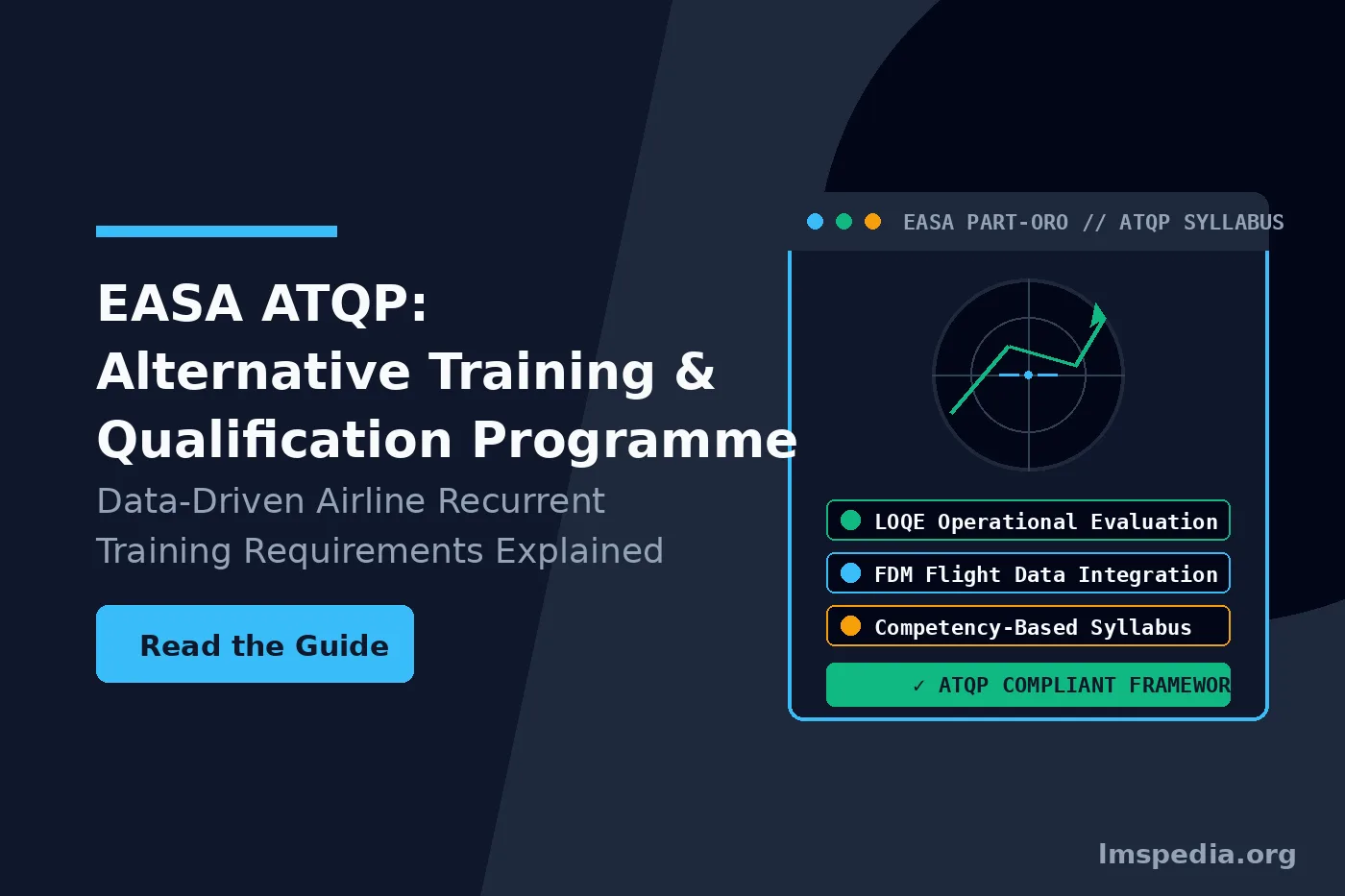
Line Oriented Quality Evaluation
Building a compliant system requires integrating several highly complex operational departments seamlessly. The Line Oriented Quality Evaluation represents the absolute cornerstone of this framework. Instead of performing disconnected maneuvers, crews fly a fully simulated commercial route. Specifically, instructors inject realistic threats into this dynamic environment naturally. Furthermore, this specific evaluation format tests the crew exactly as they operate daily. Therefore, airlines follow guidelines from the International Civil Aviation Organization (ICAO) to structure these realistic scenarios. Ultimately, line-oriented testing builds genuine operational confidence.
Flight Data Monitoring Integration
Your program must maintain a direct pipeline to your flight data monitoring department constantly. First, flight data analysts detect rising trends of unstable approaches across the network. Next, the training department must react to these negative trends instantly. Furthermore, curriculum designers use this data to build simulator scenarios targeting energy management explicitly. Therefore, structuring your syllabus using a recurrency matrix ensures critical vulnerabilities receive immediate attention. Consequently, this continuous feedback loop keeps your simulator time highly relevant. Crucially, isolation between safety and training departments destroys the entire program.
Measuring the Financial and Safety Return
Safety and Operational Impact
Implementing this massive structural change costs millions in administrative overhead initially. Therefore, you must justify this massive investment to your corporate finance department perfectly. First, the safety return on investment is completely undeniable. Airlines utilizing data-driven frameworks experience significantly fewer high-consequence incidents globally. Furthermore, their crews remain significantly better prepared for complex, unexpected system failures. Additionally, industry bodies like the International Air Transport Association (IATA) strongly endorse these advanced methodologies. Ultimately, protecting passenger lives justifies the heavy initial implementation costs completely.
Financial ROI and Efficiency
The financial return stems directly from massive operational efficiency gains. Specifically, fully approved airlines can often extend the strict time intervals between recurrent simulator checks. Furthermore, they apply these extended intervals to highly proficient veteran pilots. Saving just one simulator session per pilot generates massive multi-million dollar savings annually. Therefore, the program pays for itself rapidly across a large global commercial fleet. Consequently, executives view the training department as a strategic asset rather than a cost center. Ultimately, financial efficiency aligns perfectly with enhanced operational safety.
Conclusion
The transition toward an easa atqp model represents the absolute pinnacle of modern commercial aviation safety management. By actively embracing the alternative training and qualification programme, airlines shed the severe limitations of rigid legacy regulations. Furthermore, understanding the critical differences between atqp vs standard training allows progressive carriers to focus resources intelligently. Therefore, training departments can finally address actual operational threats directly. Securing strict atqp approval easa requires total organizational dedication and massive data transparency natively.
However, the ultimate organizational reward remains profound. First, you build a significantly safer operation perfectly equipped to handle modern airspace complexities. Next, you generate massive financial efficiencies by eliminating redundant simulator sessions. Furthermore, your flight crews develop resilient decision-making skills that survive high-stress emergencies. Therefore, commit your resources to building a mature, data-driven safety infrastructure today. Ultimately, proactive curriculum customization defines the most successful commercial airlines operating globally.
FAQ
What is EASA ATQP?
It is a highly specialized regulatory framework established by the European Union Aviation Safety Agency. It legally allows eligible commercial airlines to replace standard, highly prescriptive simulator training schedules with a fully customized training syllabus based entirely on their own internal operational safety data.
How does ATQP differ from standard aviation training?
Standard training forces all pilots to perform the exact same generic maneuvers at fixed intervals regardless of their specific operational environment. Conversely, the alternative programme uses real flight data to identify actual risks, allowing airlines to train pilots specifically on the exact threats they encounter daily.
What is required to secure EASA approval for this programme?
Securing this specific approval requires a massive multi year commitment. Airlines must possess a highly mature Safety Management System, comprehensive flight data monitoring programs, and they must successfully prove to the regulator that their customized syllabus achieves a measurably higher level of safety than standard rules.
Why do airlines invest the money to transition to this model?
Airlines invest in this specific framework because it dramatically improves overall flight safety by targeting real world threats. Furthermore, once an airline achieves full maturity within the program, they can often optimize their highly expensive simulator scheduling, generating massive financial savings annually.