
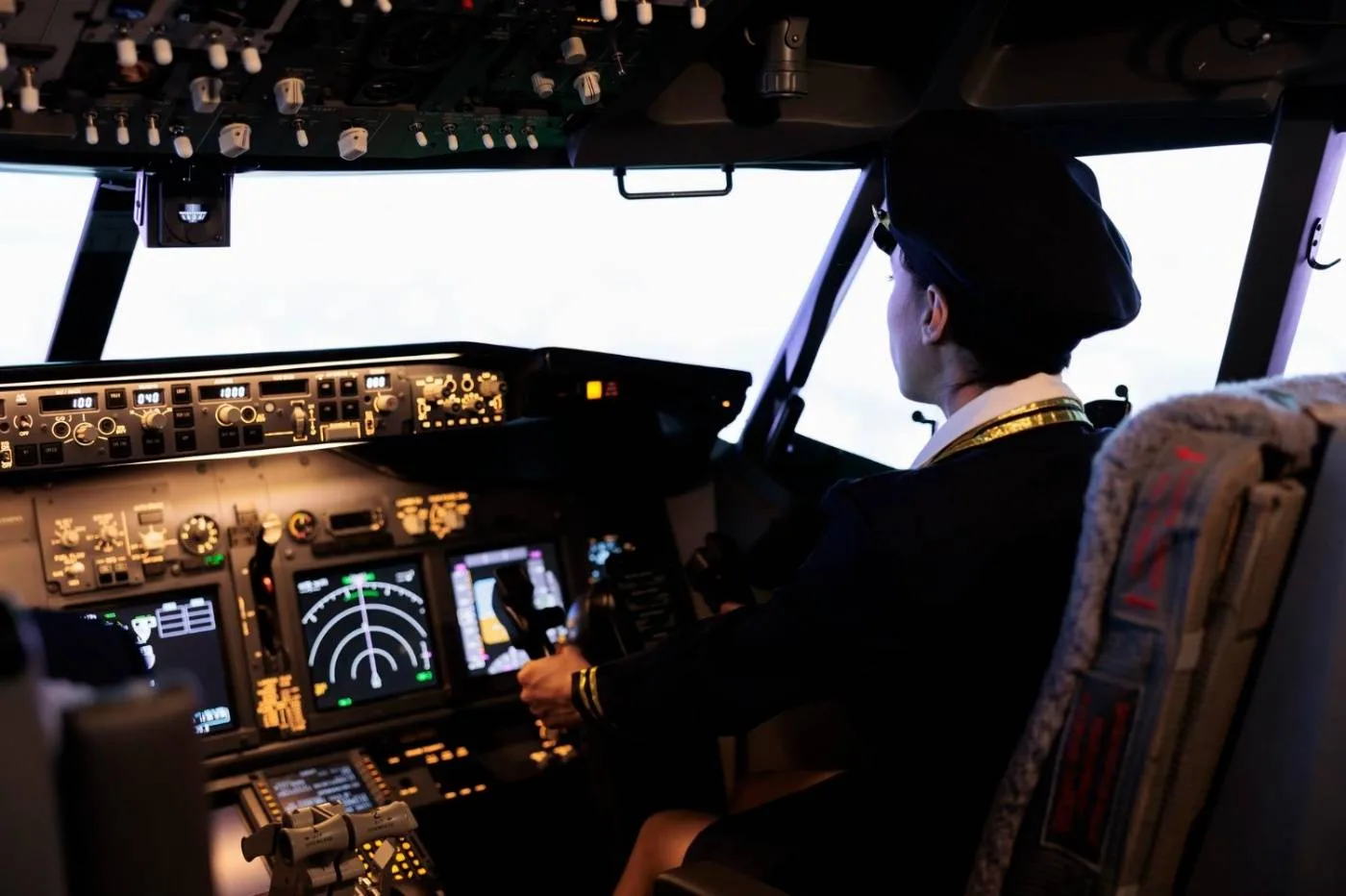
Pilot recurrent training is the mandatory, scheduled refresher training that pilots must complete throughout their careers to stay legally current and operationally safe. In short: a pilot’s certificate doesn’t expire, but their currency does. Depending on the type of operation: Part 121 airline, Part 135 charter, or Part 91 general aviation, recurrent training cycles run anywhere from every six months to every 24 months. This article breaks down the exact requirements, what recurrent programs cover, and how aviation training management software is eliminating the administrative chaos that used to surround scheduling and compliance tracking.
Why Pilot Recurrent Training Is Non-Negotiable for Aviation Safety
Pilot recurrent training exists because aviation skills are perishable. Studies and incident data consistently show that human factors, poor situational awareness, communication failures, workload mismanagement, contribute to over 70% of aviation accidents. No matter how many hours a pilot has logged, without regular structured practice and assessment, procedural sharpness erodes. The FAA frames the purpose of recurrent training plainly: to ensure “each crewmember is adequately trained and currently proficient for the type aircraft and crewmember position involved.”
The frequency and content of pilot recurrent training is ultimately set by aviation compliance training standards from ICAO, IATA, and EASA, which mandate the minimum training intervals and competency checks every licensed pilot must complete.
Skill Decay Is Real – and Measurable
We’ve seen this dynamic play out in simulator evaluations time and again. Pilots who go longer between training cycles often nail the standard procedural items but struggle when an unusual or compound malfunction is thrown at them, precisely because those edge-case scenarios aren’t rehearsed regularly in line flying. Research in aviation human factors training has consistently demonstrated that emergency procedure recall drops measurably after 60–90 days without practice. That’s why high-frequency recurrent training isn’t about bureaucratic box-ticking; it’s the mechanism that keeps proficiency real rather than theoretical.
Beyond individual skill maintenance, recurrent training is also the aviation industry’s primary vehicle for disseminating new regulatory changes, updated procedures, and emerging risk data. When an aviation safety oversight body like the FAA or EASA identifies a systemic issue, a new type of airspace conflict, updated RVSM pilot recurrent training requirements, or revised fatigue management in aviation protocols, recurrent training is how that information reaches the cockpit at scale.
How Often Is Pilot Recurrent Training Required Under FAA and EASA Rules?
The honest answer is: it depends entirely on what type of operation you fly. Some recurrent training takes place every few months, while other training is done on a biannual, annual, or biennial basis, and the FAA‘s Federal Aviation Regulations address and regulate the type, quantity, and frequency required for both pilots and other crewmembers. Here’s how that breaks down in practice.
FAA Requirements by Operation Type
| Operation Type | Regulatory Part | Recurrent Training Frequency |
|---|---|---|
| Private Pilot (General Aviation) | Part 91 | Flight Review every 24 calendar months |
| Corporate / Fractional Ownership | Part 91 Subpart K | Annual recurrent, with PIC currency checks |
| Charter / Air Taxi | Part 135 | Every 12 calendar months (ground + flight) |
| Commercial Airline | Part 121 | Ground training annually; simulator checks every 6 months |
| Drone (Remote) Pilot | Part 107 | Recurrent knowledge test every 24 months |
For Part 135 operations, the operator must ensure all required recurrent training is completed within the 12 calendar months preceding service, and operators have flexibility to adjust base months if training is completed early, provided records accurately reflect the actual training date.
For Part 121 airline operations, the picture is more layered. Recurrent ground training for crewmembers must meet minimum programmed hours in required subjects, and within every 36 months preceding service as pilot in command, each person must complete recurrent ground training on leadership and command and mentoring, covering flightcrew duties, techniques for maintaining performance standards, and professionalism with newly hired pilots.
EASA Recurrent Training Requirements
For operators based in Europe or flying under EASA jurisdiction, the framework is broadly similar but uses different regulatory language. All flight crew members are required to complete CRM training at various stages of their careers, including initial and recurrent training and on appointment to command, and this must be carried out by approved instructors following approved syllabi detailed in the Company Flight Operations Manual.
At recurrent training level under EASA, all major CRM topics must be covered over a rolling period not exceeding three years. This 3-year rolling programme structure means operators must plan their recurrent curriculum carefully, you can’t simply repeat the same module each year and claim full compliance.
For EASA recurrent training, simulator checks (OPCs/LPCs) are typically required every six months for commercial airline pilots, while line checks occur annually.
What Does a Typical Pilot Recurrent Training Program Actually Cover?
A well-designed pilot recurrent training program covers far more than just emergency procedures and instrument approaches. The best programs we’ve reviewed, and those that tend to perform best in regulatory audits, treat recurrent training as a structured curriculum rather than a checklist of required events. The core content areas are: emergency and abnormal procedures, systems knowledge, regulatory updates, and a growing block of non-technical skills.
Crew Resource Management (CRM) Training
EASA’s Safety Risk Management process has identified CRM as one of the most important safety factors in commercial air transport operations, with human factors, including situation awareness, communication, and workload management, consistently appearing among the top causal factors in accidents and incidents.
Aviation crew resource management training covers communication processes, decision-making under pressure, building and maintaining flight team cohesion, and situational awareness. Under FAA Part 135, CRM programs must include authority of the pilot in command, communication processes and coordination (including with ATC), workload and time management, situational awareness, effects of fatigue on performance and countermeasures, and aeronautical decision-making tailored to the operator’s flight environment.
In our experience reviewing training programs across regional and commercial operators, CRM sessions that use real incident case studies consistently outperform generic classroom formats. Pilots engage more, retain more, and transfer skills to the line more effectively when the scenario matches their actual operational environment.
Fatigue Management, SMS, and Human Factors
Fatigue management in aviation has moved from a soft topic to a hard regulatory requirement. FAA-mandated CRM training explicitly includes effects of fatigue on performance, avoidance strategies, and countermeasures, and for Part 121 carriers, FAA Part 117 (fatigue risk management) adds further compliance obligations tied to rest requirements and operator SMS programs.
Aviation SMS (Safety Management System) training is now a standard recurrent module for most commercial operators. SMS training typically covers hazard identification, safety risk management principles, and how pilots interact with the airline’s safety reporting culture. Aviation safety training at this level, combining human factors, fatigue science, and SMS literacy, is where we see the biggest variation in training quality across carriers.
| Recurrent Training Module | Frequency (Typical) | Regulatory Driver |
|---|---|---|
| Emergency Procedures (Simulator) | Every 6 months | FAA 121 / EASA OPC |
| CRM Recurrent | Annually (3-yr rolling) | FAA 135.330 / EASA ORO.FC.115 |
| Fatigue Management | Annually | FAA Part 117 / EASA FTL |
| Aviation SMS Training | Annually | ICAO Annex 19 / Operator SMS |
| Aircraft Systems Ground School | Annually | FAA 121.427 / EASA |
| Line Check (Live Ops) | Annually | FAA 121 / EASA LPC |
Traditional fixed-interval recurrent training programs are increasingly being replaced by competency-based training in aviation, which focuses on demonstrated performance rather than mandatory seat time.
Aviation LMS vs Training Management System: What’s the Difference and Which Do You Need?
These two terms get used interchangeably in vendor marketing, but they’re meaningfully different, and confusing them leads to buying the wrong tool. An aviation LMS (Learning Management System) is primarily a content delivery and tracking platform: it hosts eLearning modules, tracks course completions, and issues certificates. A Training Management System (TMS) is a broader operational tool that handles scheduling, simulator booking, compliance calendars, instructor assignments, and training records across an entire crew complement.
For airlines running recurrent line-pilot training and cabin crew programmes, the LMS is the workhorse for the dozens of annual compliance courses each crew member completes, with the TMS managing simulator sessions and line-training events on top.
In practical terms: if you’re a flight school or small ATO, an aviation LMS platform may be sufficient. If you’re a regional carrier managing 200+ pilots across multiple aircraft types, you likely need a TMS with an integrated aviation learning management system, or a platform that bridges both functions. The key features to evaluate:
| Feature | Aviation LMS | Training Management System (TMS) |
|---|---|---|
| eLearning / course delivery | ✅ Core function | Often available |
| Compliance tracking | Basic | Advanced, automated |
| Simulator scheduling | ❌ | ✅ Core function |
| Deadline auto-reminders | Limited | ✅ Automated |
| Regulatory audit reports | Basic | Comprehensive |
| Multi-crew type management | Limited | ✅ |
| SCORM / AICC content support | ✅ | Varies |
How Aviation Compliance Software Automates Recurrent Training Tracking
Aviation compliance software solves the problem that kills training managers: manually tracking dozens of pilots across multiple aircraft types, each with their own recurrent deadlines on staggered cycles. Aviation LMS platforms simplify this by organizing training calendars, sending reminders for expiring certifications, and logging course completions, creating the consistent level of readiness that drives safer operations.
When we look at what effective aviation compliance management actually requires, the list is long: tracking type ratings, instrument currency, CRM recurrency, simulator check dates, line check dates, medical certificate expiry, and SMS training completion, all simultaneously, for every crewmember. Manual spreadsheets create gaps. A missed recurrent deadline isn’t just an administrative inconvenience; it grounds a pilot and potentially violates 14 CFR requirements, creating significant legal and operational exposure for the operator.
Modern aviation training software like ATMS automatically requeues pilots for recurrent training when they complete a cycle, if it’s recurrent, the system schedules the next event automatically without a training manager having to intervene. This is the core value proposition: removing human error from the compliance tracking loop.
Key automation capabilities to look for in aviation compliance software:
- Automated deadline alerts – email/SMS notifications to pilots and training managers 30/60/90 days before expiry
- Auto-requeue for recurrent events – system schedules the next cycle upon completion of the current one
- Regulatory audit trails – immutable logs with timestamps for FAA/EASA audit readiness
- Role-based training paths – different curricula automatically assigned by aircraft type, base, or crew position
- Integration with HR/rostering systems – training status reflected in real-time scheduling
AI-powered LMS platforms for aviation close compliance gaps through adaptive learning engines that adjust content delivery based on individual performance data, and automated compliance alerts that flag expiring certifications before they become a grounding event.
The Best Platforms for Managing Pilot Recurrent Training in 2025-2026
There is no single “best” aviation training management platform for every operator, the right choice depends on fleet size, operation type, budget, and whether you need a pure LMS, a full TMS, or something in between. That said, these are the platforms that consistently appear in procurement shortlists and have proven track records across commercial and charter operations.
| Platform | Best For | Key Strength |
|---|---|---|
| ATMS (AQT Solutions) | Commercial airlines, MROs | Integrated TMS + LMS, auto-requeue, enterprise-grade |
| Aviatize | ATOs, flight schools, regional ops | TMS with LMS boundary overlap, strong scheduling |
| Absorb LMS | Mid-size operators needing eLearning | AI-powered, mobile-first, SCORM support |
| GyrusAim | Airlines needing role-based curricula | Initial + recurrent cycle management, regulatory reporting |
| SimpliTrain | Operators needing training management with compliance tracking | Compliance automation, clean UX, suited to structured recurrent programmes |
| Seertech | Complex multi-crew environments | Real-time data integration, mobile-friendly |
| AcademyOcean | Ground staff, cabin crew, multi-role training | Customisable course builder, aviation-specific templates |
ATMS (Advanced Training Management System) is designed specifically for aviation, military, and other highly regulated industries, engineered to ensure safety, efficiency, and compliance, with a built-in LMS supporting all personnel who require periodic compliance and qualification-based training.
Seertech facilitates the management of pilot training, certifications, and regulatory compliance with aircraft-specific courses and real-time flight data integration, and its mobile-friendly design allows aviation professionals to access courses anytime, even when offline.
When evaluating any platform for aviation recurrent training management, verify: FAA/EASA compliance reporting capability, SCORM/AICC content compatibility, simulator scheduling integration, and whether the system supports aviation training standards for your specific operation type (Part 121, 135, or EASA CAT).
Automating Pilot Recurrent Training Is Now a Competitive Advantage, Not Just a Compliance Requirement
Pilot recurrent training has always been a regulatory obligation, but the operators who treat it as a strategic capability are pulling ahead. When aviation training management is automated, training managers spend less time chasing deadlines and more time improving curriculum quality. Pilots get better, more relevant training. Audits become routine rather than stressful. And the organization builds a genuine safety culture rather than a compliance-on-paper one. The ICAO Global Aviation Safety Plan 2026–2028 sets the overarching safety priorities that drive updates to pilot recurrent training requirements across ICAO member states.
The trajectory is clear: aviation training software is getting smarter, more integrated, and more automated. AI-powered platforms are now delivering adaptive learning paths that adjust based on individual performance data, eliminating the one-size-fits-all approach that has defined aviation training programs for decades. Combined with online aviation training delivery and real-time compliance dashboards, the gap between best-in-class operators and those still running spreadsheets is widening fast.
Whether you’re a flight school, a regional charter operator, or a full-service airline, the fundamentals of pilot recurrent training haven’t changed: stay current, stay proficient, stay compliant. What has changed is how efficiently you can manage all three, and the platforms that help you do it are getting better every year.
If you’re evaluating aviation compliance software or an aviation LMS for the first time, start by mapping your current training workflows before selecting a platform. The best system is the one that fits your operation, not the one with the longest feature list.
Frequently Asked Questions
Q1. What is pilot recurrent training?
Pilot recurrent training is mandatory, scheduled refresher training that pilots must complete at regular intervals to maintain legal currency and operational proficiency. It covers emergency procedures, systems knowledge, crew resource management, and regulatory updates. The FAA defines its purpose as ensuring each crewmember remains adequately trained and currently proficient for their aircraft type and crew position.
Q2. How often is pilot recurrent training required?
Frequency depends on the type of operation. Part 121 airline pilots typically undergo simulator checks every six months and ground training annually. Part 135 charter pilots must complete recurrent training every 12 calendar months. Private pilots under Part 91 require a Flight Review every 24 calendar months at minimum. EASA commercial operators generally follow a similar cadence for simulator checks, with CRM topics covered over a rolling 3-year program.
Q3. Does recurrent training count as a flight review?
A Flight Review every 24 calendar months does not automatically equal proficiency, and while certain recurrent training events can substitute for a flight review under FAA regulations, this depends on the specific training completed and the regulatory part under which you operate. Pilots should confirm with their operator and the applicable CFR whether their recurrent training satisfies flight review currency requirements.
Q4. What is an aviation LMS and how does it help with recurrent training?
An aviation LMS (Learning Management System) is a digital platform that delivers, tracks, and manages eLearning content for pilots, cabin crew, and maintenance staff. It simplifies compliance by tracking certifications, licenses, and recurring training requirements, keeping operators audit-ready without manual record management. For recurrent training specifically, an aviation LMS automates course assignment, sends deadline reminders, and maintains completion records for regulatory audits.
Q5. Why is recurrent training important for aviation safety?
Recurrent training maintains proficiency in perishable skills, emergency procedures, abnormal checklists, and CRM techniques, that erode without regular practice. EASA’s Safety Risk Management process has identified CRM as one of the most important safety factors in commercial air transport, with human factors consistently appearing among the top causes of incidents and accidents. Recurrent training is also the primary mechanism for delivering regulatory updates, new procedure changes, and emerging safety data to flight crews.
Q6. What does pilot recurrent training typically include?
A standard pilot recurrent training program includes: simulator-based emergency and abnormal procedure training, aircraft systems ground school, crew resource management (CRM) sessions, fatigue management and human factors training, aviation SMS awareness, and where applicable, instrument proficiency checks and line checks. The amount and type of training varies based on certificate level and the regulatory part the pilot is operating under, a Part 91 private pilot’s programme looks very different from that of a Part 121 airline transport pilot.