FAA Part 141 vs Part 61 Flight Schools: Records, Curriculum and Software Needs
First, launching a successful flight academy requires critical regulatory decisions. Specifically, business owners must choose the absolute correct regulatory framework. Consequently, the profound choice between part 141 vs part 61 operations dictates your entire business model. Historically, the Federal Aviation Administration (FAA) created these distinct educational pathways safely. Ultimately, they designed them to accommodate entirely different aviation learner profiles.
Therefore, understanding these distinct legal frameworks remains absolutely essential for modern aviation entrepreneurs. Furthermore, selecting the wrong organizational structure creates massive daily administrative bottlenecks. In this comprehensive guide, we explore the exact operational differences between these two pathways. Additionally, we analyze the highly specialized flight training management software needed to maintain permanent audit readiness.
Key Takeaways

The Flexible Pathway Offers Ultimate Autonomy: The casual framework allows independent flight instructors to seamlessly adjust the specific lesson sequence dynamically. Instructors successfully alter plans based entirely on daily student needs and unpredictable weather conditions, making it incredibly ideal for busy weekend hobbyists.
The Structured Pathway Requires Strict Federal Approvals: Operating an academy under rigorous federal structure means the government must thoroughly review every detail. Regulators must formally approve your entire proprietary training syllabus before you can legally enroll any prospective career students.
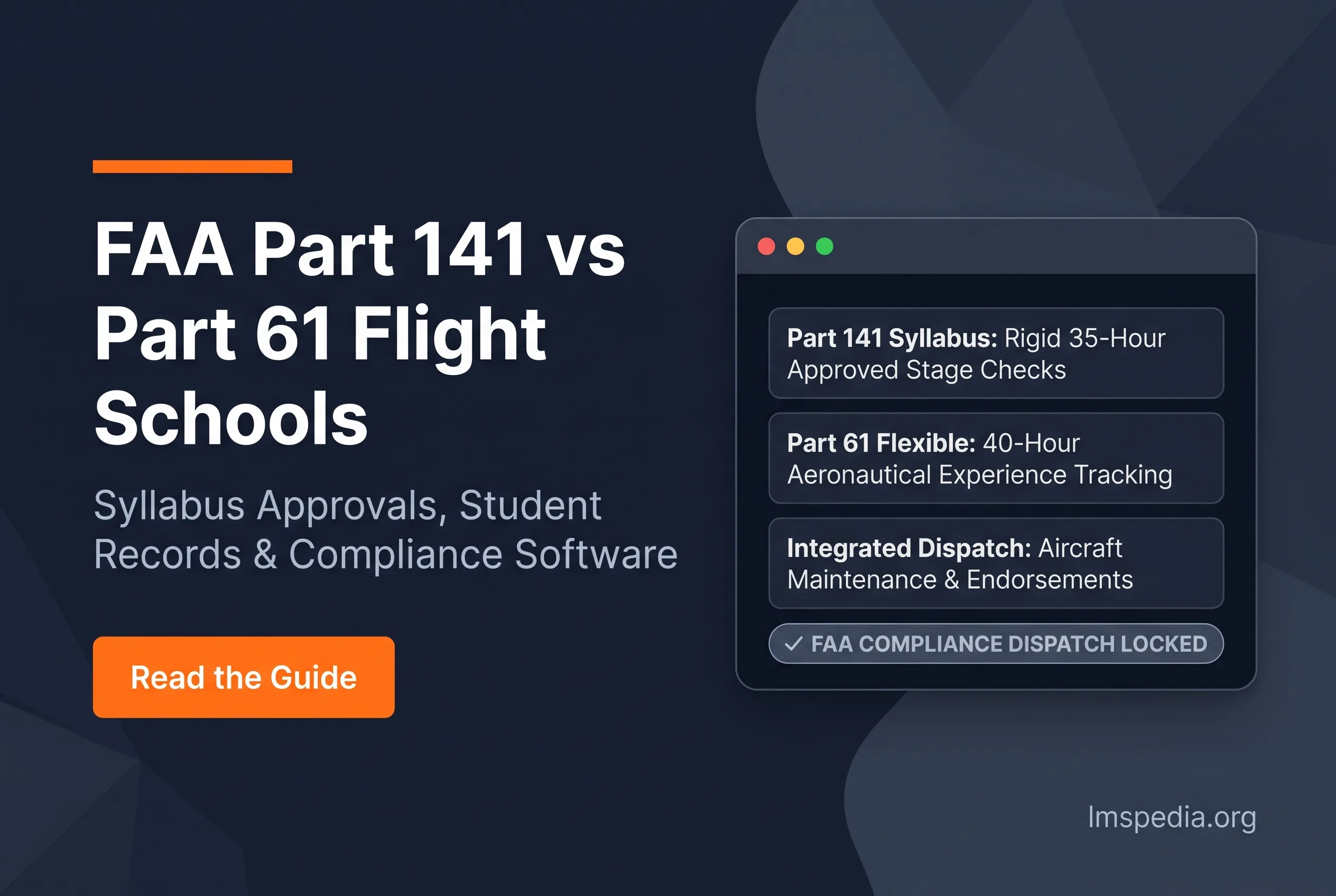
Statutory Minimum Flight Hours Differ Greatly: The highly regulated pathway legally allows dedicated students to earn their Private Pilot Certificate in strictly 35 hours instead of the 40 hours mandated under the flexible casual framework.
Impeccable Record Keeping Remains Mandatory For Both: Whether utilizing a flexible or highly structured regulatory approach, all flight schools must constantly maintain perfect, legally verifiable training records. This pristine documentation heavily ensures corporate survival during highly unannounced, stressful federal audits.
Modern Compliance Software is Absolutely Non-Negotiable: Ambitious modern flight schools must urgently deploy highly specialized software applications natively. These robust systems cross-reference student syllabus progress, instructor medical qualifications, and vital aircraft maintenance status simultaneously to actively ensure entirely safe daily dispatching.
The Regulatory Framework of Flight Training
Initially, navigating federal aviation regulations heavily intimidates new flight school owners. Specifically, the aviation industry remains one of the most strictly regulated sectors globally. Consequently, every single hour of instruction requires intense, verifiable documentation. Therefore, establishing a pristine organizational structure on day one prevents disastrous future legal liabilities.
Furthermore, the fundamental difference between these frameworks involves instructional rigidity. Essentially, one pathway offers total flexibility, while the other demands absolute structural perfection. Ultimately, your target demographic should dictate which specific pathway you pursue commercially. Below, we break down the fundamental philosophies driving both distinct regulatory structures.
The Core Philosophy of Part 61 Training
First, most independent flight instructors operate exclusively under Part 61 regulations globally. Fundamentally, this specific framework offers maximum flexibility for busy aviation students. For instance, a student can easily train at their own pace on weekends. Moreover, instructors can dynamically adjust the planned lesson sequence daily.
Specifically, they modify daily flight plans based on sudden weather changes. Furthermore, they adapt the curriculum strictly based on the specific aptitude of the student. Consequently, this casual approach highly attracts dedicated hobbyist pilots. Typically, these individuals heavily balance full-time corporate careers with their weekend aviation goals.
Identifying the Ideal Part 61 Student
Ultimately, these recreational students do not desire a rigid, stressful academic environment. Instead, they prefer learning complex maneuvers strictly at their own comfortable speed. Therefore, Part 61 remains the most popular choice for casual recreational flying. However, this extreme scheduling flexibility creates highly unique tracking challenges.
Specifically, managing these incredibly dynamic schedules requires constant operational oversight. Unfortunately, lost physical paper logbooks create severe certification delays for these casual students. Therefore, modern academies digitize these critical records immediately after every single flight. To understand broader operational setups for dynamic schedules, review our detailed guide regarding automated course scheduling and TMS setup.
Understanding the Part 141 Environment
Conversely, an faa part 141 flight school operates exactly like a highly structured university. First, the FAA must formally review and approve every single training syllabus. Consequently, gaining initial part 141 curriculum approval requires intense administrative effort. Furthermore, enrolled students must follow the approved lesson sequence absolutely perfectly.
Ultimately, skipping lessons or casually altering the syllabus violates federal aviation regulations. Additionally, this rigid structure benefits dedicated, career-oriented professional pilots immensely. Specifically, regional commercial airlines highly prefer graduates from structured, strictly regulated programs.
The Rigorous Syllabus Approval Process
Historically, writing a compliant syllabus takes several grueling months of administrative work. Specifically, flight school owners must detail every single minute of ground and flight instruction. Furthermore, they must submit these massive documents directly to their local Flight Standards District Office. Consequently, federal inspectors review the curriculum rigorously before granting initial operational authority.
Therefore, you cannot simply launch this type of academy overnight. Instead, you must heavily invest in professional instructional designers to build the curriculum. To assist flight schools with this intense compliance, organizations like the Aircraft Owners and Pilots Association (AOPA) provide extensive training resources. Ultimately, leveraging professional resources prevents frustrating government rejection letters.
The Role of the Chief Flight Instructor
Importantly, this highly regulated environment demands strict institutional oversight internally. Specifically, the FAA requires these academies to employ a dedicated Chief Flight Instructor. Furthermore, this individual must possess thousands of hours of verified instructional experience. Consequently, hiring a qualified Chief Instructor represents a massive initial financial payroll investment.
Additionally, this leader actively assumes total legal responsibility for all school operations. Specifically, they must conduct annual standardization checks on every single junior instructor. Ultimately, this ensures every instructor teaches the exact same curriculum flawlessly. Therefore, maintaining absolute consistency remains the primary goal of this regulatory framework.
Curriculum and Flight Hour Differences
Undoubtedly, the most famous difference between these frameworks involves minimum flight hours. Specifically, the FAA established entirely different aeronautical experience minimums for each path. Consequently, flight schools heavily market these specific differences to prospective students. However, marketing these minimums often creates highly unrealistic student expectations.
Therefore, administrators must transparently explain the reality of flight training durations. Specifically, very few human beings ever complete flight training in the absolute minimum time. Ultimately, weather cancellations and natural learning plateaus constantly extend the required training timeline.
Private Pilot Minimums Explored
Under Part 61, a private pilot certificate requires exactly forty minimum flight hours. Alternatively, an approved Part 141 syllabus requires only thirty-five total hours. Consequently, prospective students immediately assume the regulated path saves them significant money. However, these reduced hour minimums come with a very strict operational catch.
Specifically, the student must perform every single maneuver flawlessly on the first attempt. In reality, the national average for a private pilot certificate heavily exceeds sixty hours. Therefore, most students vastly exceed these statutory minimums regardless of the regulatory framework. Ultimately, schools should never market this option solely as a faster educational pathway.
Commercial Pilot and Instrument Requirements
Similarly, commercial pilot certificates require two hundred and fifty hours under Part 61. In contrast, regulated commercial students need only one hundred and ninety hours. Consequently, this massive sixty-hour reduction saves career students tens of thousands of dollars. Furthermore, instrument rating requirements heavily favor the regulated pathway as well.
Specifically, flexible students need fifty hours of expensive cross-country flight time. Conversely, regulated students bypass this massive cross-country requirement entirely. Therefore, students aiming for immediate airline careers almost exclusively choose the structured pathway. Ultimately, the long-term financial savings for professional pilots remain absolutely undeniable.
Examining Authority and Stage Checks
Crucially, testing methodologies differ wildly between these two distinct regulatory environments. Specifically, assessing student competency dictates exactly how a pilot earns their final license. Consequently, understanding the testing infrastructure remains vital for organizational planning. Furthermore, testing delays frequently completely stall student progress for several frustrating months.
Therefore, schools must actively manage their testing resources highly efficiently. Ultimately, keeping students moving through the curriculum guarantees stable organizational cash flow. Below, we compare the distinct testing philosophies utilized by each framework.
The Pressure of Part 141 Stage Checks
First, structured academies divide their approved syllabus into distinct educational stages. Specifically, a student must pass a rigorous stage check to advance further. Furthermore, the Chief Flight Instructor usually conducts these highly stressful internal examinations. Consequently, this continuous internal testing ensures the student constantly meets federal standards.
Additionally, some elite academies earn special examining authority from the federal government. Specifically, this rare authority allows the school to issue the final pilot license directly. Therefore, the student bypasses the external federal examiner entirely. Ultimately, this incredible privilege prevents students from waiting months for an external testing appointment.
The Part 61 Checkride Process
Conversely, flexible students do not require formal internal stage checks. Instead, their primary instructor simply endorses their logbook when they appear fully ready. Subsequently, the student must schedule a formal checkride with a Designated Pilot Examiner. Unfortunately, these external examiners remain incredibly scarce across the entire country.
Consequently, students frequently wait eight weeks just to take their final exam. Furthermore, their flying skills naturally degrade heavily during this long, frustrating waiting period. Therefore, they must purchase expensive refresher flights while waiting for the examiner. Ultimately, this massive testing bottleneck represents the biggest drawback of the flexible pathway.
Managing Aviation Training Records
Crucially, global aviation safety relies entirely on verifiable operational documentation. Consequently, both distinct regulatory pathways require incredibly meticulous daily record keeping. First, flight instructors must carefully document student performance and specific weather conditions. Furthermore, they must record every single maneuver practiced during the flight.
Ultimately, managing this massive volume of data manually invites disastrous human error. Specifically, missing a single required endorsement invalidates the entire training record. Therefore, implementing robust digital administration prevents catastrophic regulatory failures.
The Danger of Manual Logbook Endorsements
Historically, the aviation industry relied entirely on physical paper logbooks. Specifically, instructors wrote complex federal endorsements by hand using blue ink. However, these physical books frequently become lost, stolen, or severely water-damaged. Consequently, a lost logbook literally destroys thousands of dollars of undocumented flight training.
Therefore, relying on fragile paper folders guarantees eventual regulatory failure. Instead, ambitious modern academies completely digitize these records immediately after landing. By utilizing specialized digital software, schools protect their students from devastating data loss. Ultimately, cloud backups ensure permanent safety for these highly valuable documents.
TSA and Medical Certificate Tracking
Importantly, aviation security remains a massive top federal priority globally. First, flight schools must thoroughly vet every single student prior to training. Specifically, the Transportation Security Administration strictly monitors all foreign flight students. Therefore, schools must process highly complex federal background checks constantly.
Furthermore, administrators must securely retain these sensitive clearance documents for several years. Consequently, losing these critical files triggers massive, immediate federal fines. Additionally, schools must precisely track instructor medical certificate expirations daily. Ultimately, sophisticated automation perfectly prevents dispatchers from assigning flights to legally unqualified instructors.
Regulatory Audits
Crucially, the FAA conducts rigorous, highly unannounced inspections of all regulated flight schools. Therefore, you must constantly maintain perfect, timestamped digital records of every single flight. Specifically, you must track ground lessons and specific instructor endorsements flawlessly. Ultimately, missing records will absolutely result in the immediate suspension of your federal operating certificate.
Flight School Compliance Software Requirements
Naturally, tracking complex aviation metrics requires highly specialized digital tools. Specifically, generic corporate scheduling apps absolutely cannot handle complex FAA compliance rules. Therefore, aviation academies must strictly procure dedicated flight school compliance software. First, this software provides the necessary rigid digital infrastructure required for survival.
Furthermore, attempting to modify generic software costs thousands in useless development fees. Consequently, purchasing purpose-built aviation platforms remains the safest financial strategy. Ultimately, these highly specialized systems understand the unique logistical mechanics of daily flight operations.
Aircraft Maintenance Integration
First, compliance software must integrate flight scheduling directly with aircraft maintenance tracking. Specifically, training aircraft require highly rigorous mandatory inspections every one hundred flight hours. Consequently, flying an aircraft past this strict deadline violates federal law immediately. Therefore, the software must physically block dispatchers from assigning an expired aircraft.
Furthermore, instructors must easily report minor aircraft mechanical squawks digitally. Specifically, they should log these minor defects directly from their mobile tablets. Ultimately, this instant communication alerts the maintenance hangar immediately. Indeed, this seamless integration keeps the fleet flying safely and highly profitably.
Automated Billing and Student Accounts
Moreover, the software must carefully track complex student accounts and flight block payments. Specifically, aviation training remains incredibly expensive, requiring large upfront financial deposits. Consequently, the system must precisely deduct funds based on exact engine running time. Furthermore, it must accurately calculate complex wet and dry hourly aircraft rental rates.
Additionally, it must store encrypted copies of pilot licenses safely. To explore exactly how enterprise compliance systems protect sensitive data, read our analysis detailing the LMS for corporate compliance training 2026. Ultimately, deploying a totally unified financial system entirely eliminates dangerous administrative silos.
Comparing Aviation Training Software Solutions
Currently, the specialized aviation software market offers several incredibly robust operational platforms. Specifically, procurement teams must carefully evaluate how these systems handle complex daily dispatching. Furthermore, they must verify how effectively the platform tracks rigid syllabus progress.
Below, we compare the leading solutions utilized heavily by major flight academies. Additionally, major industry advocacy groups like the Flight School Association of North America (FSANA) highly recommend adopting these ecosystems. Ultimately, moving to a fully paperless environment protects both your students and your business.
| Platform / Solution | Primary Focus | Aviation Compliance Strength |
|---|---|---|
| SimpliTrain | Versatile training operations and compliance scheduling. | Excels at automated certification tracking, digital resource allocation, and maintaining absolute perfect audit readiness. |
| Flight Schedule Pro | Aviation dispatch and complete flight school management. | Provides incredibly robust aircraft maintenance tracking integrated directly with complex instructor and student scheduling. |
| Talon Systems | Enterprise Part 141 aviation training management. | Delivers highly rigid syllabus tracking and strict electronic grading designed specifically for massive university flight programs. |
Ultimately, selecting the correct software heavily dictates your daily operational efficiency. Furthermore, robust digital platforms automate tedious compliance warnings effortlessly. Specifically, they automatically alert chief flight instructors weeks before crucial student records expire. To find the perfect specific fit for your exact fleet size, review the best aviation training management systems available today.
The Financial Realities of Flight School Operations
Crucially, launching an aviation academy requires massive upfront capital expenditure. Specifically, purchasing modern training aircraft completely drains organizational financial reserves quickly. Consequently, flight schools operate on incredibly thin daily financial profit margins. Therefore, maximizing aircraft utilization rates remains the absolute key to corporate survival.
Furthermore, grounded aircraft generate zero revenue while still incurring massive insurance costs. Ultimately, weather delays and unexpected mechanical failures constantly threaten the monthly financial budget. Indeed, strong software helps administrators immediately reschedule canceled flights to protect vital revenue.
Instructor Turnover and Payroll Management
Additionally, flight schools suffer from incredibly high employee turnover rates constantly. Specifically, instructors typically leave for commercial airlines the moment they reach fifteen hundred hours. Consequently, administrators must constantly hire and train brand new junior instructors. Therefore, the digital management system must handle rapid employee offboarding seamlessly.
Furthermore, the system must reassign orphaned students to new instructors automatically. Specifically, calculating highly varied hourly instructor payroll requires flawless digital timekeeping. Ultimately, automated payroll processing keeps your vital flight instructors happy and motivated. Indeed, a frustrated instructor will quickly leave your academy for a local competitor.
Conclusion
In conclusion, launching a successful flight academy requires choosing the absolute correct regulatory path carefully. First, the complex business decision between part 141 vs part 61 permanently dictates your total administrative workload. Furthermore, it entirely defines your specific target demographic and daily operational philosophy. Specifically, the flexible pathway offers unmatched casual freedom for hobbyist learners and independent weekend instructors.
Conversely, the highly structured pathway provides the incredibly rigid environment demanded heavily by future commercial airline pilots. Ultimately, both distinct regulatory pathways absolutely require exceptional operational discipline and total safety oversight. Therefore, ambitious flight schools must completely abandon fragile, outdated physical paper records entirely. Instead, they must rapidly implement highly comprehensive digital management ecosystems securely.
By doing so, they completely ensure perfect legal compliance during highly unannounced federal audits. Consequently, automated software handles complex aircraft maintenance, intricate student billing, and vital TSA security tracking flawlessly. Finally, to deeply understand exactly how to scale these incredibly complex logistical operations safely, consult our comprehensive resource covering training operations management at scale.
FAQ
Q1. What is the main operational difference between Part 141 and Part 61 flight schools?
Fundamentally, the primary operational difference lies purely in institutional structure and strict government oversight. Specifically, highly regulated schools utilize a completely rigid, federally approved syllabus that all students must meticulously follow sequentially. Conversely, flexible schools operate dynamically, openly allowing instructors to rearrange daily lessons easily, provided the student eventually meets the final federal aeronautical experience requirements safely.
Q2. Is it actually faster to get a commercial pilot license at a Part 141 school?
Technically, yes, primarily because the federal government intentionally lowers the minimum required flight hours significantly for these specific structured students. For example, a Private Pilot Certificate legally requires only 35 hours instead of 40. However, the national completion average heavily hovers around 65 hours regardless of the specific school type. Therefore, the legally reduced minimums rarely reflect the actual chronological time it realistically takes to safely gain flying proficiency.
Q3. Do regional commercial airlines explicitly prefer graduates from Part 141 flight schools?
Generally, major and regional commercial airlines openly show a highly strong preference for graduates hailing from structured programs. Specifically, the rigid, highly disciplined structure of an approved program perfectly mirrors the intense, stressful training environment of a modern commercial airline. Furthermore, graduates successfully emerging from approved university aviation programs officially qualify for a Restricted ATP (R-ATP), which significantly lowers their required hiring minimums from 1,500 to 1,000 flight hours.
Q4. What specific operational records must a Part 141 flight school maintain permanently?
Crucially, heavily regulated schools inherently face an incredibly intense daily administrative burden. Specifically, administrators must carefully retain formal student enrollment forms, exact daily attendance records, daily flight grades, and specific internal stage check results safely. Furthermore, the academy must permanently retain records explicitly proving that all instructors actively receive mandatory annual standardization training. Ultimately, these crucial records must legally remain completely available for unannounced federal inspection for a strict minimum of one year following student graduation.
Q5. Why do flight schools desperately need specialized digital compliance software?
Ultimately, standard generic calendar applications absolutely cannot actively prevent severe, catastrophic aviation safety violations. For instance, highly specialized flight school software will physically digitally block a busy dispatcher from assigning an aircraft if its mandatory 100-hour mechanical inspection expired yesterday. Additionally, the advanced software automatically verifies that the assigned flight instructor currently holds a fully valid federal medical certificate before ever allowing the training flight to legally launch.