
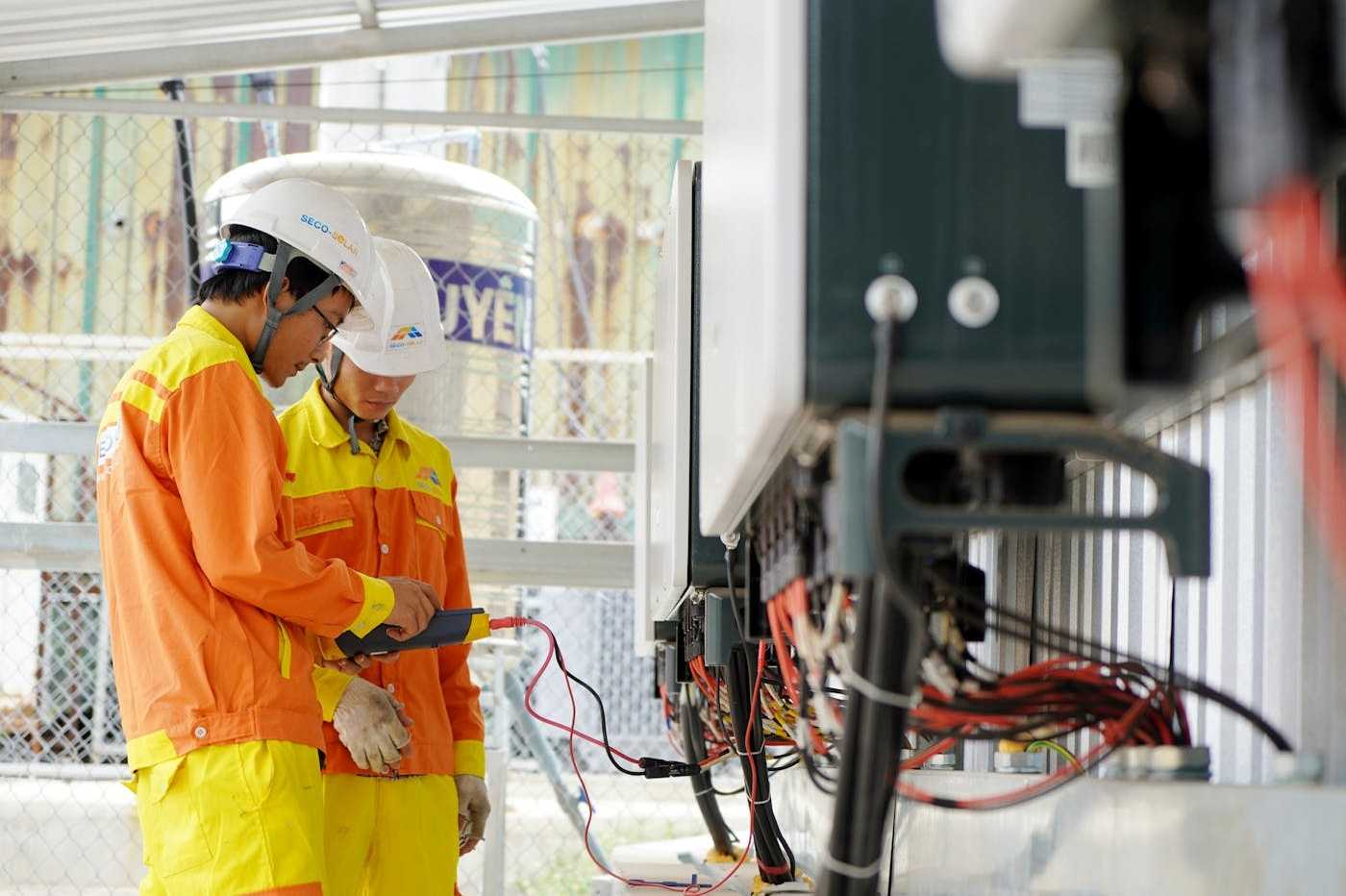
Every year, construction remains one of the most hazardous industries in the world. Falls, equipment failures, and chemical exposures are not abstract risks – they are daily realities on job sites across the country. Yet many construction firms still rely on paper sign-in sheets, one-off toolbox talks, and outdated binders to manage safety training.
The result? Workers arrive on-site undertrained. Certifications lapse unnoticed. OSHA violations pile up. And when an incident occurs, there is no documentation to demonstrate due diligence.
A modern Learning Management System (LMS) changes that equation entirely. The best LMS for construction industry doesn’t just deliver training – it tracks it, automates reminders, generates audit-ready reports, and scales across dozens of sites with a distributed workforce. Whether you are managing 20 workers or 2,000, the right construction training software can be the difference between a safe site and a costly incident.
This guide is built for construction company owners, safety managers, and L&D leaders who need clarity – not just a list of platforms. We break down what to look for, which platforms perform best in construction-specific scenarios, and how to make the right buying decision.
This falls under the broader category of best LMS for compliance training.
What Is an LMS in the Construction Industry?
An LMS (Learning Management System) in the construction industry is a digital platform designed to create, deliver, track, and report on training programs for construction workers, supervisors, and safety personnel.
Unlike generic corporate LMS tools built for desk-based employees, a construction-focused LMS must account for:
- A mobile, field-based workforce with limited screen time
- OSHA regulatory requirements that change by trade, state, and project type
- The need to track individual certifications across multiple job sites
- Multi-language workforces -Spanish, Portuguese, and other languages are common on US construction sites
- Offline learning capabilities for workers in areas with poor connectivity
In essence, safety LMS training in construction is not just about delivering content. It is about creating a verifiable, compliant, and scalable training ecosystem that reduces liability and improves worker safety. Besides, Construction and manufacturing share nearly identical TNA approaches for safety and compliance.
Why Construction Companies Need LMS for Safety and Compliance
The pressure to maintain workplace safety in construction comes from multiple directions – regulatory bodies, insurance carriers, project owners, and the workers themselves. Here is why an LMS has become essential:
1. OSHA Requirements Are Non-Negotiable
OSHA certification for construction workers is not optional. OSHA 10-hour and 30-hour construction programs are mandatory on many federally funded projects, and violations can result in fines ranging from thousands to hundreds of thousands of dollars per citation.
An LMS built for safety LMS training automates OSHA training for construction workers, scheduling courses, sending completion reminders, and storing certificates in a searchable digital record. When an OSHA compliance training audit occurs, your safety manager can pull documentation in minutes instead of scrambling through paper files.
2. Real-World Risk Reduction
This starts with a proper safety training needs assessment to identify critical gaps.
Consider a mid-size contractor running three simultaneous projects. New workers are hired weekly. Without a structured digital system, some workers miss fall protection training. Others operate equipment without current certifications. A site foreman discovers the gap only after a near-miss incident.
An LMS prevents this scenario. Training is automatically assigned at onboarding, certifications are tracked in real-time, and supervisors receive alerts when credentials are expiring. The training happens before workers step on-site, not after an incident.
3. Workforce Standardization Across Sites
Large construction firms face a standardization problem: training quality varies by site, trainer, and project. An LMS solves this by delivering consistent, approved training content to every worker regardless of location.
4. Audit Readiness
General contractors and project owners increasingly require documented proof of worker training before awarding subcontracts. An LMS provides a centralized repository of completed training, certifications, and compliance records that can be exported and shared instantly.
This requires audit-ready compliance training records for verification.
Key Features to Look for in a Construction LMS
Not all LMS platforms are built with construction in mind. Here are the critical features that separate a construction-capable LMS from a generic training tool:
Mobile Accessibility for Field Workers
Most construction workers do not sit at desks. Your LMS must deliver training on smartphones and tablets with a user experience that works on a 6-inch screen, with gloves off, during a 10-minute break. Native apps with push notifications perform better than mobile-optimized web browsers alone.
This is why choosing a mobile-friendly LMS for field workers is essential.
Offline Learning
Job sites in tunnels, underground utilities, or remote locations often have no reliable internet. The best construction LMS platforms allow workers to download modules in advance and sync progress when connectivity is restored.
Certification Tracking and Alerts
The platform should automatically track OSHA cards, First Aid/CPR certifications, equipment operator licenses, and site-specific credentials. Automated expiration alerts sent to workers and supervisors prevent compliance gaps.
Compliance Reporting and Audit Trails
Compliance reporting should be a one-click export, not a manual process. Look for platforms with pre-built construction compliance reports, individual training histories, and the ability to generate documentation for OSHA audits, general contractor requirements, and insurance reviews.
This also depends on LMS data security for compliance records
Multi-Language Support
A significant portion of the US construction workforce is non-English speaking. Spanish-language training is a minimum requirement for many firms. Look for LMS platforms that support multilingual content delivery and UI navigation.
Real-Time Analytics and Dashboards
Safety managers and L&D leaders need visibility into training progress at the site level and company level simultaneously. Real-time dashboards showing completion rates, overdue certifications, and upcoming renewals allow proactive intervention before a compliance issue becomes a liability.
Best LMS for Construction Industry: Platform Comparison
The following platforms are evaluated specifically for their performance in construction-specific training environments. Each is assessed on practical construction use cases, not just general LMS features.
| LMS Platform | Best For | Key Strengths | Limitations |
|---|---|---|---|
| Procore LMS | Enterprise GCs & large subs | Deep project integration, site-level reporting | Higher cost, complex setup |
| TalentLMS | Mid-size construction firms | Mobile-first, multi-language, easy authoring | Limited construction-specific templates |
| SafetyCulture (EdApp) | Field safety training | Microlearning, offline mode, gamification | Reporting less robust than enterprise tools |
| 360Learning | Firms with internal SMEs | Peer-to-peer learning, collaborative content | Weaker compliance tracking |
| Absorb LMS | Large, multi-site operations | Advanced reporting, scalability, SSO | Higher learning curve |
| Cornerstone OnDemand | Enterprise with HR integration | Broad compliance tools, certification mgmt | Over-featured for smaller firms |
1. Procore LMS
Originally known as a construction project management platform, Procore’s LMS component integrates directly with project data, workforce records, and safety documentation. For general contractors already using Procore for project management, the LMS adds training delivery within the same environment their teams already use daily.
- Key construction feature: Training assignments can be tied to specific projects and roles
- Best for: Enterprise GCs managing complex multi-site operations
- Limitation: Pricing is premium; smaller subcontractors may find it over-engineered
2. TalentLMS
TalentLMS is a popular choice for construction firms that need a flexible, mobile-first platform without the complexity of enterprise tools. Its intuitive interface allows safety managers to build and deploy OSHA training for construction workers quickly, even without an L&D background.
- Key construction feature: Multi-language UI and content support; strong mobile app
- Best for: Mid-size contractors with 50–500 workers across multiple sites
- Limitation: Requires custom content development for construction-specific scenarios
3. SafetyCulture (EdApp)
SafetyCulture’s EdApp is purpose-built for frontline workers. Its microlearning format – short, 5-minute modules, is ideal for field workers who cannot dedicate long training sessions. The platform includes a built-in content library with safety topics and supports offline learning, making it particularly strong for remote or underground job sites.
This is where a microlearning LMS for safety briefings becomes highly effective.
- Key construction feature: Offline learning, microlearning format, gamified quizzes
- Best for: Subcontractors and specialty trades prioritizing daily safety reinforcement
- Limitation: Advanced compliance reporting requires integration with other tools
4. 360Learning
360Learning takes a collaborative approach to training, enabling experienced safety supervisors and foremen to create and share training content from within the field. This peer-to-peer model is valuable for capturing institutional knowledge that generic content libraries cannot replicate.
- Key construction feature: Field-generated content, collaborative authoring
- Best for: Firms with strong internal subject matter experts wanting to scale knowledge
- Limitation: Compliance tracking and certification management are less structured
5. Absorb LMS
Absorb LMS is designed for scale. Large construction firms running dozens of projects with thousands of workers benefit from its robust reporting engine, SSO integrations, and administrator controls. Certification management is a standout feature, supporting complex renewal workflows.
- Key construction feature: Advanced reporting, bulk user management, certification workflows
- Best for: Large contractors with dedicated L&D teams and complex compliance requirements
- Limitation: Implementation requires significant setup investment
How Construction Companies Use LMS: Real-World Scenarios
Scenario 1: Onboarding New Hire Workers Before Day One
A commercial concrete subcontractor hires 40 new laborers for a downtown high-rise project. Using their construction training software, the safety manager sends each worker a mobile link two days before their start date. Workers complete OSHA 10 orientation, fall protection basics, and site-specific hazard awareness on their own devices. On day one, every worker arrives with completed training records – no classroom session required.
Scenario 2: Managing Certification Renewals Across 12 Job Sites
A regional utility contractor tracks 300 equipment operators across active sites. Their LMS sends automated 60-day and 30-day renewal alerts for crane operator licenses, rigging certifications, and confined space entry training. Supervisors see a live dashboard showing which workers have current credentials before assigning daily tasks.
Scenario 3: Responding to a Near-Miss Incident
After a near-miss involving a forklift on a distribution center project, the safety director creates and deploys an updated forklift safety module within 24 hours. All forklift operators across four active sites receive the assignment automatically, and completion is tracked and documented within 48 hours of the incident.
Scenario 4: Preparing for a General Contractor Audit
A specialty HVAC contractor receives a 72-hour notice of a GC-mandated training audit. Their LMS generates a compliance report showing every worker’s training history, certification status, and completion dates by trade and project. The report is exported and submitted within two hours.
Benefits of Using LMS for Construction Safety Training
- Reduced accident rates through consistent, pre-site training that addresses the most common construction hazards.
- Real-time compliance tracking that eliminates the risk of expired certifications going unnoticed
- Scalable delivery that supports training 10 or 10,000 workers without proportional increases in L&D staff
- Audit readiness with exportable records that satisfy OSHA, insurance, and general contractor documentation requirements
- Reduced training costs by eliminating the need for repeated in-person sessions and travel to centralized training facilities
- Improved worker retention by demonstrating investment in safety and professional development
These trends align with compliance training benchmarks for trade industries.
How to Choose the Right Construction Training Software
Buying an LMS is a multi-year commitment. Before signing a contract, evaluate these criteria through the lens of your specific construction operation:
Define Your Primary Use Case
Are you primarily solving a new hire onboarding problem, a certification tracking problem, or a multi-site training delivery problem? The platforms that excel at each of these are different. Start with your most acute pain point.
Evaluate Mobile Performance in the Field
Request a field trial. Have a foreman or site supervisor complete a test module on their phone during a break. If the experience is frustrating, your workers will not complete training voluntarily.
Confirm Offline Capability
If any of your job sites have unreliable internet, offline learning is not optional. Confirm that offline mode works without a VPN or IT support intervention.
Assess Content Library Depth
Does the platform provide OSHA-aligned construction content out of the box, or will you need to build everything from scratch? A strong pre-built library reduces time-to-value significantly.
Review Compliance Reporting
Ask the vendor to demonstrate how you would generate a compliance report for an OSHA audit. If the process is more than three steps, it is too complex for daily use by a safety manager with other responsibilities.
Understand Pricing for Your Workforce Model
Construction workforces are seasonal and variable. Per-seat pricing models penalize companies that add workers for a project and then reduce headcount. Look for platforms with flexible seat pricing or project-based licensing options.
Frequently Asked Questions
Q1. What is LMS in the construction industry?
An LMS in the construction industry is a software platform used to deliver, track, and manage safety and compliance training for construction workers, supervisors, and office staff. It replaces paper-based training records with digital systems that support mobile learning, certification tracking, and compliance reporting across one or multiple job sites.
Q2. What is the best LMS for construction companies?
The best LMS for construction companies depends on company size and primary use case. Procore LMS excels for enterprise general contractors already on the Procore platform. TalentLMS is a strong choice for mid-size firms. SafetyCulture (EdApp) is ideal for field-first microlearning. Absorb LMS is best for large, multi-site operations with complex compliance needs.
Q3. How do construction companies train workers online?
Construction companies use mobile-first LMS platforms to deliver online training that workers can access on smartphones or tablets before arriving on-site, during breaks, or at home. Training modules are typically short (5–15 minutes), include video and interactive quizzes, and are available in multiple languages. Offline download capability allows training on sites without reliable internet access.
Q4. What features should a construction LMS have?
A construction LMS should include mobile accessibility, offline learning, certification tracking with automated renewal alerts, compliance reporting for OSHA audits, multi-language support, real-time analytics dashboards, and the ability to deliver site-specific training content alongside standard safety curricula.
Q5. Does LMS support OSHA training for construction?
Yes. Most construction-focused LMS platforms include OSHA 10 and OSHA 30 aligned content, along with specific modules for fall protection, scaffold safety, excavation, electrical hazards, and personal protective equipment. The platforms track completion and generate certificates that meet documentation requirements.
Q6. Can LMS track safety and compliance training?
Yes. Tracking is one of the core functions of a construction LMS. Platforms track individual completion records, certification expiration dates, and training hours by worker, site, or trade. Compliance reports can typically be exported as PDFs or spreadsheets for audits, general contractor requirements, and insurance documentation.
Q7. What is construction training software?
Construction training software is a category of digital tools that includes LMS platforms, safety management systems, and e-learning authoring tools designed for the construction industry. The best platforms combine content delivery, tracking, compliance reporting, and workforce management in a single system accessible from the field
Q8. Is there an LMS for safety training in construction?
Yes. Several LMS platforms are specifically optimized for construction safety training. SafetyCulture (EdApp), TalentLMS, Procore LMS, and Absorb LMS are among the leading options. These platforms address the unique needs of construction, field-based workers, OSHA compliance, multi-site operations, and multi-language workforces.
Conclusion: Build a Safer Jobsite with the Right LMS
Safety training in construction has never been more important – or more achievable. The platforms available today make it possible to onboard workers faster, track certifications automatically, and prepare for compliance audits without disrupting project operations. Mining industry, Construction and automotive share almost identical LMS requirements – safety compliance, field workers, equipment certification, high turnover.
The best LMS for construction industry is not the one with the most features. It is the one your workers will actually use, your safety managers can run without IT support, and your compliance officers can rely on when an audit arrives. Prioritize mobile usability, offline capability, and practical compliance reporting over flashy dashboards.
Start by auditing your current training gaps. Identify where certifications are lapsing, where onboarding is inconsistent, and where documentation is weakest. Then evaluate the platforms in this guide against those specific pain points.
The investment in a construction-specific LMS pays dividends in reduced incidents, lower liability, and a workforce that arrives on-site ready, qualified, and documented. That is not just good compliance practice – it is smart business.
To structure your selection, use this LMS evaluation checklist for construction.